科技
神秘的水星即将迎来访客——在航天器历经八年的漫长航行之后
中文译文
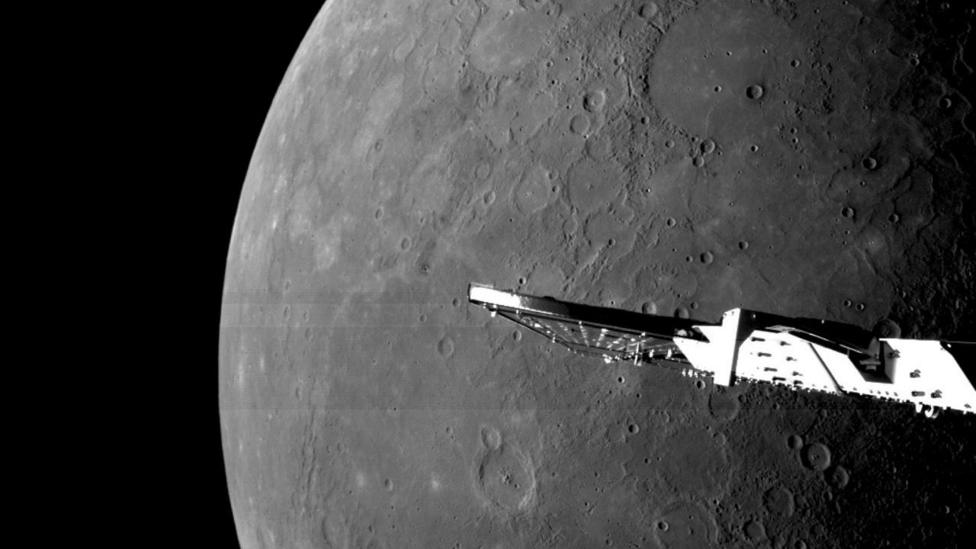
经过为期八年的旅程,飞行了近60亿英里(100亿公里),一艘名为“贝皮科伦坡”的航天器即将抵达最终目的地,并进入水星轨道。
它将进入一个极其恶劣的环境:水星是距离太阳最近的行星,温度可高达430摄氏度,随后又会骤降至-180摄氏度,而且还会持续受到强烈的太阳辐射照射。
迄今为止,人们对这颗行星的探索还很少,但人们希望这次任务能够解开水星的一些重大谜团。
这些谜团包括:尽管水星距离太阳很近,但其陨石坑中为何仍有冰存在;以及其表面遍布的那些神秘凹陷究竟是什么。
“我认为水星是内太阳系中不太受关注的行星,但正因如此,它才如此引人入胜,”该任务的主要研究人员、莱斯特大学的艾玛·邦斯教授说道。“从科学角度来看,我们之所以如此渴望了解水星,原因有很多:它是如何形成的、如何演变的、如今它的面貌如何,以及它如何与太阳相互作用,还要经历怎样的极端太空天气。”
“贝皮科伦坡号”任务是由欧洲航天局(ESA)和日本宇宙航空研究开发机构(JAXA)共同开展的,于2018年从法属圭亚那发射升空。
由于这艘航天器要深入太阳系内部,它不得不与太阳强大的引力作斗争。因此,在整个旅程中它都处于制动状态,同时还选择了一条极为复杂的路径——先绕地球一圈,再绕金星两圈,最后绕水星六圈——以此降低速度,最终进入轨道。按计划,这段旅程本应耗时七年,但由于“贝皮科伦坡号”的推进系统出现故障,这场原本就漫长的航行又多花了一年时间。进入轨道的最后一步操作极为危险:它需要执行一次持续37分钟的减速转弯,才能被行星的引力捕获。
一旦出现任何差错,航天器可能会飞掠过水星。
迄今为止,只有两艘航天器到访过水星——都是NASA的任务。
“水手10号”在20世纪70年代三次飞掠这颗行星,随后“信使号”航天器于2011年抵达水星,并在其轨道上运行了四年。
但关于这个微小的世界,仍有许多未解之谜。
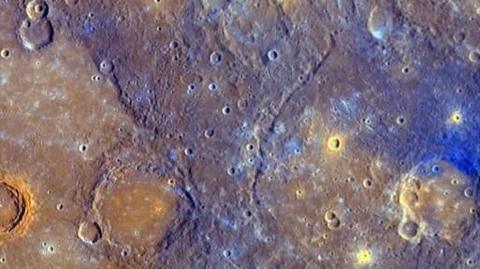
水星仅比我们的月球稍大一些,表面布满了古老的火山、高耸的悬崖以及巨大的陨石坑。
而且水星上的时间流逝方式令人难以置信。
这颗行星绕太阳公转的速度极快,因此水星上的一年仅相当于地球上的88天。但它自转的速度却极其缓慢,所以水星上的一天相当于地球上的59天。除了研究水星极地地区的陨石坑中为何存在冰之外,该任务还将花时间研究行星表面那些奇怪的凹陷。
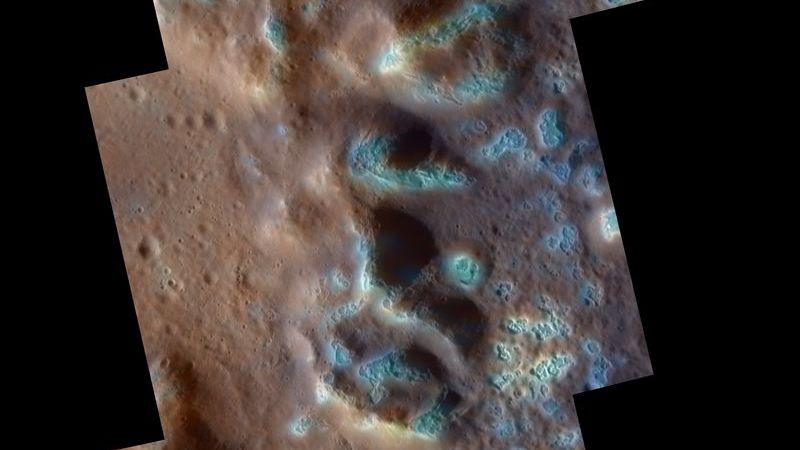
水星表面遍布数千个这样的凹陷。它们很浅,但边缘陡峭,且常常成群出现。从行星学的角度来看,这些凹陷形成时间较短,大约只有10万年。
科学家们知道这些并非撞击坑——即由太空岩石碰撞在表面形成的较大凹痕——但他们并不清楚这些凹陷究竟是什么,以及它们是如何形成的。
“贝皮科伦坡”号还将帮助研究水星的另一个令研究人员困惑的方面。尽管水星体积很小,但它却拥有巨大的金属核心。
艾玛·邦斯教授表示,水星可能曾经更大,但在其早期历史中可能遭遇过一次“肇事逃逸”式的碰撞。
“一种解释是,在那次大规模碰撞中,水星的地幔被剥离掉了,”她解释道。“或者,是经过较长时间内的多次碰撞,逐渐剥离了行星的外层区域、地幔和地壳,从而形成了我们今天所看到的这颗行星。”
她还说,这颗行星也可能在早期太阳系中金属含量丰富的区域以那种方式形成。
不同寻常的是,这是一次“买一送一”的任务——航天器上有两艘。
抵达水星几周后,它们将会分离。
一艘属于欧洲航天局的航天器将近距离研究行星表面,另一艘属于日本宇宙航空研究开发机构的航天器则将从远处观测这颗行星。
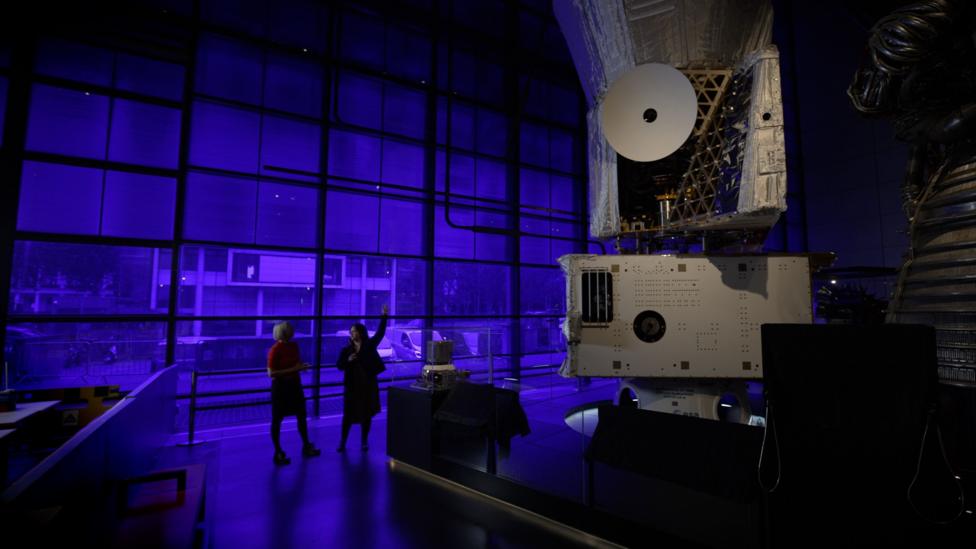
伦敦科学博物馆展出了贝皮科伦坡号的全尺寸模型。在航天器组装过程中,它被用来进行测试。
负责制造这艘航天器的空中客车公司系统工程师杰西卡·马歇尔向我们展示了贝皮科伦坡号的关键特征,并表示分离时刻对团队来说将会“令人紧张不已”。这两艘航天器在发射及漫长的旅程中必须被牢牢地连接在一起,但如今,八年过后,它们需要被小心翼翼地分离。
“我们设计了一种经过深思熟虑的特殊机制,”马歇尔说道。
“它一直处于太空恶劣的辐射环境以及极端的温度变化中,经过八年之后,这个弹簧机制必须以非常轻柔的方式释放……在释放的同时,它还会发生扭转,从而让那艘航天器开始旋转。”
由于贝皮科伦坡号上搭载了两颗装有众多仪器的轨道器,其团队希望找到水星之谜的答案。
当然,一旦抵达水星,他们可能会发现更多秘密。
原文
After an eight-year journey travelling almost six billion miles (10bn km), a spacecraft called BepiColombo is about to reach its final destination and get into orbit around Mercury.
It will be entering an extremely hostile environment: Mercury is the closest planet to the Sun and temperatures can reach a fierce 430C and then plunge to -180C, and it is constantly blasted with intense solar radiation.
Until now, the planet has been little explored but the hope is this mission will solve some of Mercury's major mysteries.
These include uncovering why there is ice in its craters despite its proximity to the Sun, and understanding the mysterious hollows that are dotted all over its surface.
"I think it's a little bit of an under-loved planet in the inner Solar System, but I think that's one of the reasons why it is so compelling," said Prof Emma Bunce, from Leicester University, who is a principal investigator on the mission.
"There are lots of reasons, scientifically, why we really want to understand Mercury, how it formed, how it evolved, what it looks like today, but also how it interacts with the Sun and the extreme space weather that it experiences."
The BepiColombo mission, which is a collaboration between the European Space Agency (ESA) and Japanese Space Agency (JAXA), blasted off in 2018, launching from French Guiana.
With the spacecraft heading deep into the inner Solar System, it has had to battle the Sun's immense gravitational pull.
So it has had its brakes on for the entire journey, and has also taken a very convoluted path - looping once around the Earth, twice around Venus and six times around Mercury - to slow it down enough to get into orbit.
This journey should have taken seven years, but a problem with BepiColombo's propulsion system meant the already epic voyage was extended by a year.
The final manoeuvre to get into orbit is a perilous one: it needs to perform a 37-minute handbrake turn to be grabbed by the planet's gravity.
If anything goes wrong, the spacecraft could hurtle past Mercury.
Only two spacecraft have visited Mercury until now - both Nasa missions.
Mariner-10 flew past the planet three times in the 1970s, and then the Messenger spacecraft arrived at Mercury in 2011 and spent four years in orbit.
But there is still much to discover about this tiny world.
Mercury is only a bit bigger than our Moon, and is covered in ancient volcanoes, towering cliffs and colossal craters.
And time on Mercury passes in a mind-bending way.
The planet zips around the Sun so quickly, a year on Mercury lasts just 88 Earth days. But it turns incredibly slowly on its own axis, so a single day there lasts 59 Earth days.
As well as investigating why Mercury has ice in its craters in the polar regions, the mission will also spend time studying strange dents in the planet's surface.
There are thousands of hollows all over it. They are shallow but with steep sides and often clustered together, and in planetary terms, they are young: about 100,000 years old.
Scientists know they are not impact craters - larger pockmarks on the surface caused by colliding space rocks - but they are not really sure what the hollows are or how they formed.
BepiColombo will also help to study another aspect of Mercury that has been puzzling researchers. Despite the planet's tiny size, it has a huge metal core.
Prof Emma Bunce said that the planet could once have been much bigger, but was potentially the victim of a "hit and run" early in its history.
"One of the explanations is that the mantle was stripped away in a large collision," she explained.
"Or it's a combination of collisions over a longer period of time that then strips away its outer outer regions, its mantle and its crust, and leads to the planet that we see today."
Or she said, it could have just formed that way in a metal-rich part of the early Solar System.
Unusually, this is a sort of "buy one get one free" mission - there are two spacecraft onboard.
A few weeks after arriving at Mercury they will separate.
An ESA craft will study the surface close-up, the other, which belongs to JAXA, will view the planet from a distance.
A life-size model of BepiColombo is on display at the Science Museum in London. It was used to test the craft while it was being put together.
Jessica Marshall, a systems engineer at Airbus, who built the spacecraft, showed us Bepi's key features - and said the moment of separation would be "nerve-wracking" for the team.
The two spacecraft had to be very securely attached together for their launch and long journey, but now, eight years later, they have to delicately disconnect.
"We have designed a special mechanism that we have thought very carefully about," said Marshall.
"It's been exposed to the harsh radiation of space and highly different thermal temperatures, and after eight years this is a spring mechanism that has to then release very gently… As it releases, it actually also twists in order to start the spin of that spacecraft as well."
With two orbiters at Mercury, both packed with instruments, the BepiColombo team hopes to find answers to Mercury's mysteries.
Of course, they may uncover many more once they arrive.