文化体育
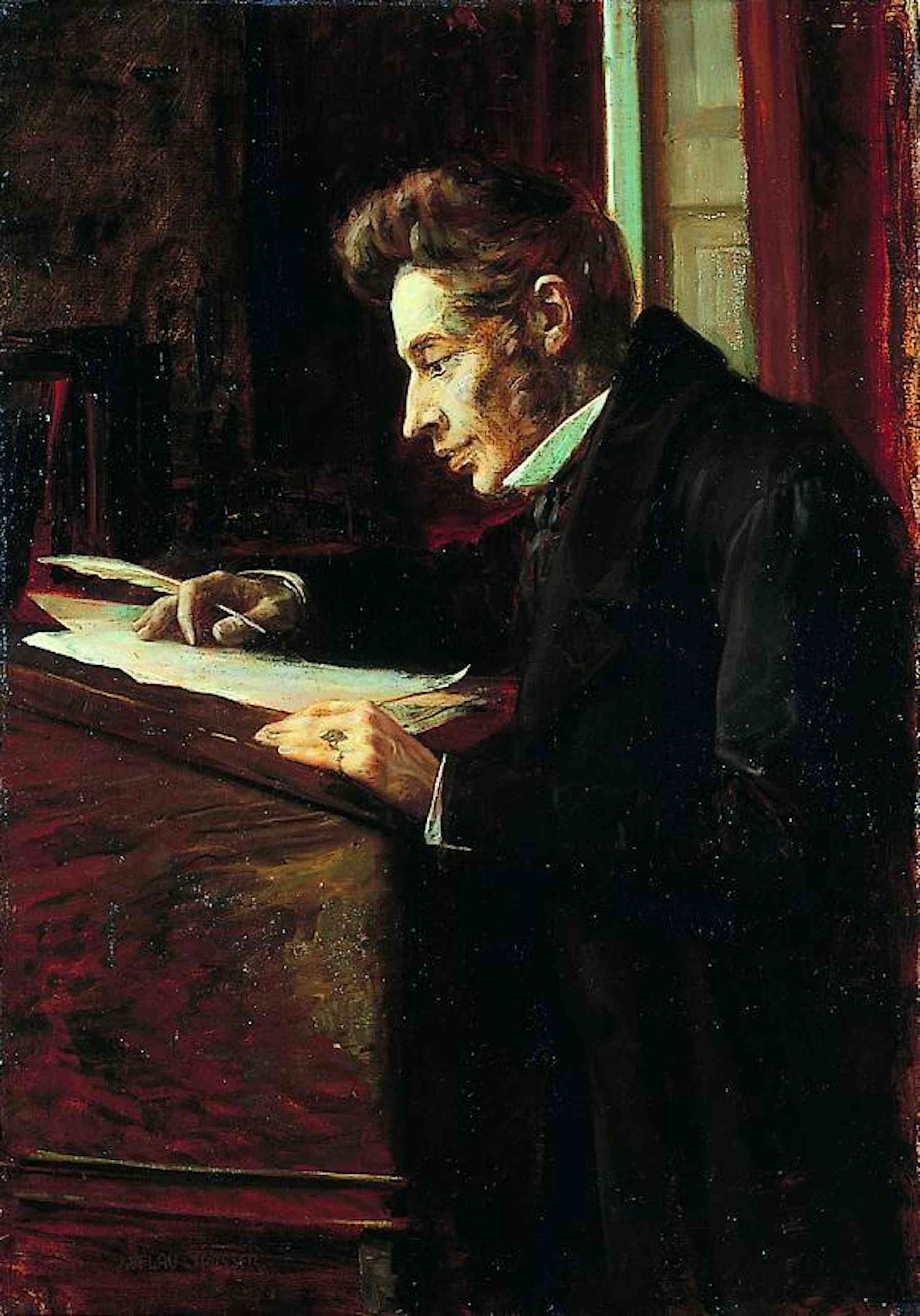
这是真正的爱情——还是执着的激情?存在主义之父克尔凯郭尔对此有一些思考。
中文译文
青春之恋、蜜月之恋、迷恋之情——这些往往显得无比美好。你有着强烈的渴望,希望时刻与对方保持联系,不愿让对方离开自己的视线。
这是许多美好爱情故事的开始。但有时,那种痴迷的感觉永远不会消失——这段关系也无法成熟,甚至可能带来伤害。你知道这段关系对你有害,却无法结束它。你越试图摆脱,就感觉越陷入困境。
作为一名咨询师,我经常帮助那些将感情关系视为一种瘾癖、并将那种情绪上的起伏误认为是爱情的人。而作为一名哲学家,我有时会借鉴19世纪丹麦哲学家索伦·克尔凯郭尔的思想,来思考这两者之间的差异。克尔凯郭尔最为人熟知的是他的宗教著作。如今,他被视为存在主义之父,存在主义强调个人自由、自我创造与个人责任。因此,爱情成为他作品的核心主题也就不足为奇了。他所说的“伦理”之爱能够拓展自由,而“审美”之爱则会限制自由。
审美之爱
1843年,年轻的克尔凯郭尔出版了《非此即彼》,这是他的第一本哲学著作,也是最重要的一部作品。这两卷书以“维克托·埃雷米塔”这一笔名出版,这是克尔凯郭尔一生中使用的众多笔名之一。
《非此即彼》区分了“审美”与“伦理”两种生活方式。审美生活主要追求个人享乐,而伦理生活则着眼于认识到自己的行为对他人的影响。每种生活方式都有其独特的爱情形式。审美之爱是一种让人“陷入”其中的爱情。它自然而然地降临到人身上,是一种强大且似乎无法抗拒的力量。克尔凯郭尔写道,审美之爱的恋人们“极度渴望对方”。
有些持久的爱情也是这样开始的。但审美之爱缺乏维持关系稳定所需的信任与尊重。判断对错、善恶的标准在于情感与欲望,而非原则。
与一个自己不信任的人建立联系并对其产生依赖,会带来一种令人痛苦的沉溺式爱情。这种爱情可能会摧毁恋人与被爱之人,但往往双方都不愿放弃它。我的一位来访者立刻陷入了疯狂的爱情之中。那种激情是他从未体验过的。尽管他怀疑这段关系能否长久,但他告诉我,他愿意放弃一切,只为能享受这一年的时光,甚至六个月。就在他准备彻底改变自己的生活以与她在一起时,几个月后这段关系破裂了。他陷入了极度黑暗的状态,开始怀疑自己和整个世界。
这正是克尔凯郭尔所描述的“审美”之爱的典型例子,他将其视为一种执念或强迫行为。用现代术语来说,这类似于成瘾:一种尽管我们知道它会给自身及周围的人带来伤害,却仍觉得不得不继续的行为模式。心理学家和哲学家们正在探讨如何定义“成瘾”,以及爱情是否也可能成为一种成瘾,但研究表明,两者在行为和大脑活动方面可能存在相似之处。强迫性的爱往往利用这段关系来逃避恋人自身的问题。这样的人可能看起来对所爱之人极为痴迷。但实际上,他们将所爱之人视为能够填补内心空虚或解决焦虑的对象,而非一个拥有自身需求与愿望的独立个体。
克尔凯郭尔指出,从本质上讲,审美之爱是一种“绝望”,源于与自我的疏离,是一种自我排斥或自我欺骗。
过度沉迷于某人可以让我们忽视自身的自我排斥与空虚感。审美之爱试图通过对方获得自由,而非真正自由地去爱对方。
伦理之爱
对克尔凯郭尔而言,还有另一种选择:伦理之爱,它源于美德、选择以及坚定的自我意识。克尔凯郭尔在《非此即彼》的第二卷以及他于1847年以自己名义出版的《爱的作品》一书中探讨了这种爱。克尔凯郭尔认为,伦理之爱缺乏审美之爱中的那种执念与强迫。它源于自我意识、自觉选择与自由,而非盲目的欲望。
简而言之,伦理之爱是一种持续的自觉承诺,不受情绪起伏的影响。这适用于所有类型的爱,无论是浪漫之爱还是其他形式的爱。克尔凯郭尔在《爱的作品》中写道,爱是“良心的问题”,而非冲动或算计的结果。
爱应当建立在尊重之上:将他人视为其自身目的,而非实现我们自身目的的手段。此外,伦理之爱还以信任为根基。若没有这些基础,就只有亲密关系的幻觉存在。
以原则而非情感为根基的爱听起来可能像是一种责任。但对克尔凯郭尔而言,它反而能带来自由。他写道:“唯有责任才能带来真正的自由。自发的爱虽能使人自由,但下一刻又会使人陷入依赖。”这种矛盾的观点源于他的这样一个理念:我们必须运用自由来成为真正的自我,这一概念在他所阐述的存在主义哲学中得到了进一步发展。他认为,人类需要一个比自身更伟大的存在作为依托,才能充分运用自己的自由。对克尔凯郭尔而言,这个更伟大的存在就是个人化的上帝,但即便不涉及上帝的概念,他的见解依然具有启发性。
克尔凯郭尔强调,伦理之爱不仅能解放爱人,也能解放被爱者:“一个人能为另一个人做的最崇高的事,就是让他获得自由,帮助他独立自立。”这种爱并非将两人合二为一——那种才是充满强迫性、沉迷性的爱。伦理之爱存在于两个选择彼此信任、尊重、支持与宽恕的独立个体之间。爱情幻象与真爱的区别有着悠久的历史。克尔凯郭尔为我们提供了如何有效区分二者的见解——以及真爱的力量在于彼此的解放。
原文
Young love, honeymoon love, infatuation – these often feel spectacular. You have a burning need to be in constant contact, and you don’t want to let that person out of your sight.
It’s the start of many happy love stories. But at times, that feeling of obsession never fades – and the relationship never matures, or it even proves harmful. You know the relationship is bad for you, but you can’t end it. The more you try to break free, the more you feel stuck.
As a counselor, I often work with people whose relationships feel like an addiction, and who mistake that emotional roller coaster for love. And as a philosopher, I sometimes turn to 19th-century Danish philosopher Søren Kierkegaard to reflect on the differences between the two.
Kierkegaard is best known for his writing on religion. Today, he’s considered the father of existentialism, which stresses individual freedom, self-creation and personal responsibility. It is no surprise, then, that love is a central focus of his work. What he called “ethical” love expands freedom, while “aesthetic” love restricts it.
Aesthetic love
In 1843, a young Kierkegaard published “Either/Or,” his first book of philosophy – and one of his most important. The two volumes were published under the pseudonym “Victor Eremita,” one of many that Kierkegaard used throughout his life.
“Either/Or” makes a distinction between “aesthetic” and “ethical” ways of living. The aesthetic life is focused mainly on personal pleasure, while the ethical life expands to an awareness of how actions affect others.
Each way of life has its own form of love. Aesthetic love is one that you “fall” into. It comes over you. It is a powerful, seemingly irresistible force. The aesthetic lover “desires the individual absolutely,” Kierkegaard wrote.
Some lasting love begins that way, too. But aesthetic love lacks the trust and respect needed for stability. The yardstick of good and bad, right and wrong is centered on feelings and desires, not principles.
Feeling connected to and dependent on someone you don’t trust creates the tumult of addictive love. It can destroy the lover and the beloved, but often neither wants to give it up.
A counselee of mine fell instantly and madly in love. The passion was unlike anything he’d ever experienced. Though he doubted that the relationship could last, he told me he’d give up everything just to ride the wave for a year, or even six months. He was in the process of upending his life to be with her when the relationship failed a few months later. He went to a very dark place, doubting himself and the world.
This was a textbook example of Kierkegaard’s “aesthetic” love, which he talked about as an obsession or compulsion. In today’s terms, I’d consider it similar to addiction: a pattern that we feel compelled to continue, despite knowing how much it hurts us and others around us. Psychologists and philosophers debate how to define “addiction,” and whether love can become one, but research indicates there can be similarities in behavior and brain activity between the two.
Obsessive, compulsive love often uses the relationship to escape the lover’s own issues. He or she may seem besotted with their beloved. In reality, though, they see the beloved as an object that can fill their emptiness or resolve their angst, rather than an independent human being with his or her own needs and desires.
At its root, Kierkegaard writes, aesthetic love is “a kind of despair,” rooted in estrangement from oneself, a kind of self-rejection or self-deception.
Obsessing over someone can serve to distract us from our self-rejection and emptiness. Aesthetic love seeks freedom through the other person, rather than freely loving them.
Ethical love
For Kierkegaard, there is an alternative: ethical love, rooted in virtue, choice and a solid sense of self. Kierkegaard discusses this kind of love in the second volume of “Either/Or” and in “Works of Love,” a book he published in 1847 under his own name.
Kierkegaard maintains that ethical love lacks the obsession and compulsion of aesthetic love. It is rooted in self-awareness, conscious choices and freedom, not thoughtless desire.
Ethical love is, in short, an ongoing conscious commitment, independent of the ebb and flow of emotion. This holds for all love, romantic or otherwise. Love is “a matter of conscience,” not impulse or calculation, Kierkegaard wrote in “Works of Love.”
It should be based on respect: treating other people as ends in and of themselves, not means to our own ends. In addition, ethical love is anchored in trust. Without these foundations, only the illusion of intimacy is possible.
Love centered on principles, not feelings, may sound like duty. But for Kierkegaard, it was freeing. No one should accept mistreatment: “Duty alone makes for genuine freedom. Spontaneous love makes a man free and in the next moment dependent,” he wrote.
This paradoxical view results from his idea that we must use our freedom to become ourselves, a concept he develops in his philosophy of existentialism. He maintains that human beings need an anchor in something greater than ourselves to fully utilize our freedom. Ultimately, for Kierkegaard, this was a personal God, but his insights can be illuminating even without reference to God.
Kierkegaard stresses that ethical love liberates not only the lover but the beloved: “The highest that one human being can do for another is to make him free, to help him stand alone.” This kind of love isn’t the joining of two into one – that is the enmeshment of obsessive, compulsive, addictive love. Ethical love is between two individual human beings who have chosen to trust, respect, support and forgive one another.
The distinction between the illusion of love and real love has a long history. Kierkegaard provides insight into how to effectively tell the difference – and how the power of real love lies in mutual liberation.