科技
Chess.com的下一步举措是打造一个涵盖从麻将到数独等经典游戏的新平台。
中文译文
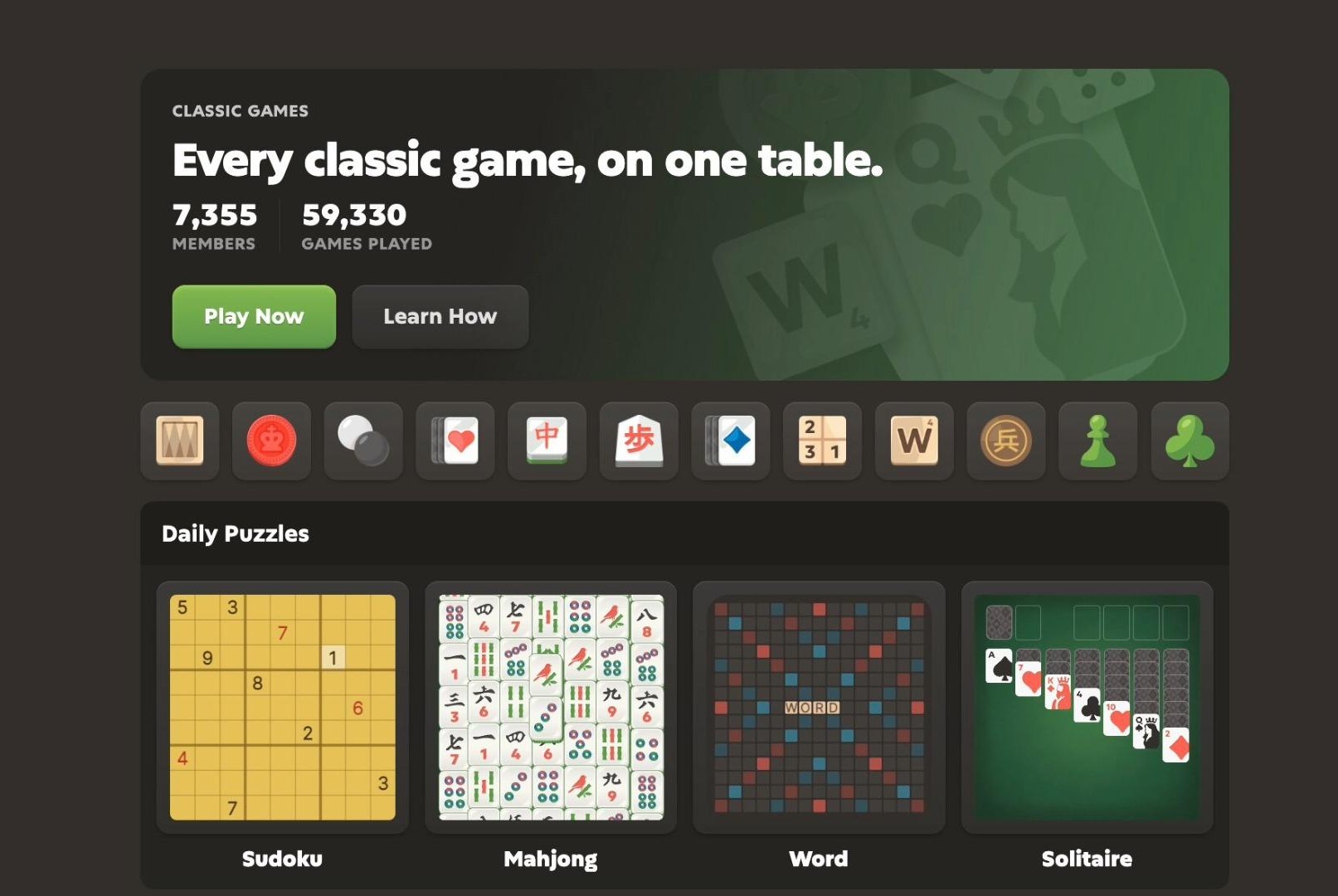
Chess.com正准备将业务拓展到国际象棋之外的更多领域。在今年早些时候推出了无赌博功能的扑克网站Gambit之后,该公司现在又新增了10种游戏:西洋双陆棋、跳棋、围棋、红心游戏、麻将、将棋、数独、纸牌游戏、中国象棋,以及一种名为word的拼字游戏替代品。这些游戏都属于Chess.com全新的经典游戏平台,该平台将于周六在网页上以及针对iOS和Android系统的新型应用中启动公开测试版。
“我们的联合创始人经常遇到有人来找他们,说‘我每周三都会组织麻将聚会’,或者‘我和五六个朋友常去芝加哥的某家酒吧,我们很喜欢玩围棋,但那里没有Chess.com’,”首席增长官Albert Cheng在接受The Verge采访时说道。“Chess.com能够发展出拥有近3亿用户的庞大用户群体,而其他这类经典游戏却很难做到这一点。”Classic Games旨在填补这一空白。其中一些新游戏,如将棋或象棋,是与国际象棋类似的策略游戏;而其他游戏则风格迥异,比如数独、纸牌游戏和文字游戏。程表示,Classic团队在选择这些新游戏时“综合考虑了用户反馈、市场调研,以及我们自身对能否为这些游戏提供优质服务的信心”。该平台专注于那些“具有长期学习过程且拥有玩家社区的经典游戏”。
如果您曾经在Chess.com上玩过游戏,那么Classic Games会让您感觉十分熟悉。每款游戏都配有教学内容、排行榜和评分系统。像跳棋或麻将这样的多人游戏,提供与其它玩家或机器人对战的选项,而且使用的机器人角色与Chess.com上的相同。(无论是在Chess、Gambit还是Classic平台上,马丁依然是评分最低的机器人。)并非所有游戏都具有相同的玩法模式——文字游戏和麻将类游戏有类似国际象棋的谜题,数独则有每日更新的谜题网格,而单人纸牌游戏则有每日特惠内容。
据程表示,此次扩展并未让Chess.com本身被忽视,相反,它的状况比以往任何时候都要好。“坦率地说,在我任职期间,国际象棋在公众心目中的地位从未像现在这样高,”程说道,“我们的日活跃用户数量达到了公司成立以来的最高水平。”他拒绝透露Chess.com目前的日活跃用户具体数字,但表示该网站的运营“非常出色”。
因此,尽管该公司正在拓展业务范围,但国际象棋依然是其核心业务。“全身心致力于开发新游戏的人占公司总人数的比例还不到1%,”程说。AI在帮助Chess.com仅凭少数员工就在几个月内推出11款新游戏方面发挥了关键作用。今年早些时候,程告诉The Verge,他的团队在AI的帮助下开发了Gambit游戏,主要利用AI处理编码任务。他表示,他们在开发Classic游戏时也采用了“几乎完全相同的思路”,再次借助AI加快了编码进程。
“由于这些游戏都是基于Chess.com的代码库、设计系统、机器人角色以及评分系统构建的,这为我们带来了巨大优势,让我们能够借助AI快速行动,以极小的团队规模将这类游戏推向市场,”程说道。“随着我们开发的游戏越来越多,基于现有基础设施,可以快速开发出相关的衍生游戏,而无需一切从零开始。”程表示,经典游戏的艺术设计与制作并未使用人工智能。“其外观和风格是由人类精心打造的,我们为此感到自豪,”他说。“事实上,这是一种融合。有一支由才华横溢的人士组成的小团队,他们具备出色的产品与设计判断力,并且会运用人工智能技术。”
Chess.com能够如此自如地运用人工智能,可能是因为人类国际象棋选手们已经与机器一起竞技和学习了几十年。“从某种程度上来说,我们很幸运,因为人工智能与国际象棋已经结合了大约30年,”程说道,他提到了1996年加里·卡斯帕罗夫与IBM的Deep Blue超级计算机之间的国际象棋对决。“甚至在20年前公司成立之前,创始人们就已经认为人工智能在国际象棋领域具有强大的能力,这一观念早已深入他们的公司理念之中。”在游戏行业的其他领域,围绕人工智能使用的紧张局势日益加剧。程表示,虽然Chess.com可能在利用人工智能“加速”编码任务,但创意方面的重要性却愈发突出。“在艺术和设计方面,相关人员的比例正在发生显著变化,我们正在招聘更多这类人才,”他说,并补充称,该公司利用从Classic Games那里学到的更快开发流程,“在Chess.com上推出的重要功能比往年要多得多”。
Chess.com或许也并未停止扩充其游戏库。程表示,未来该平台的游戏数量很可能会进一步增加。
原文
Chess.com is ready to go a lot bigger than chess. After launching Gambit, a gambling-free poker site, earlier this year, the company is now adding 10 more games: backgammon, checkers, go, hearts, mahjong, shogi, sudoku, solitaire, xiangqi, and a Scrabble alternative called word. They’re all part of Chess’s new Classic Games platform, which is launching its public beta on Saturday on the web and through a new app for iOS and Android.
“Our cofounders have had many people come up to them and say, ‘Hey, I run a mahjong night on Wednesdays’ or ‘I go to this local bar in Chicago with like five people, and we love playing go, but we lack a Chess.com,’” chief growth officer Albert Cheng says in an interview with The Verge. “The way that Chess.com has grown this community of almost 300 million members has not really happened for a lot of these other types of classic games.”
Classic Games is aimed at filling that gap. Some of the new games, like shoji or xiangqi, are strategy games similar to chess while others are further afield, like sudoku, solitaire, and word. The Classic team chose the new games through “a mix of community feedback, market research, and then just our own confidence in our ability to serve that game well,” Cheng says. It’s focused on classics that “have some sort of lifelong journey of learning and a community.”
Classic Games will feel familiar if you’ve ever played a match on Chess.com. Each game has lessons, leaderboards, and a rating system. Multiplayer games like checkers or mahjong have options for matches against other players or bots, and they use the same bot characters that Chess.com has. (Martin remains the lowest-rated bot across the board, whether it’s on Chess, Gambit, or Classic.) Not all of the games have the same play modes — word and mahjong have puzzles like chess, while sudoku has a set of daily grids and solitaire has daily deals.
The expansion hasn’t put Chess.com itself on the back burner, according to Cheng. If anything, it’s never been better. “Chess is more and more so in the public zeitgeist than I’ve ever seen it, frankly, during my time here,” Cheng says. “Our daily active users are higher than they’ve ever been during the company’s history.” He declined to share exactly how many daily users Chess.com currently has but said the site is “doing amazingly well.”
So, while the company is expanding beyond its domain name, chess remains its primary focus. “The amount of folks that are fully dedicated toward building new games is less than 1 percent of the company,” according to Cheng.
AI played a key role in helping Chess.com launch 11 new games in a matter of months with a team of only a few people. Earlier this year, Cheng told The Verge his team built Gambit with the help of AI, mainly for coding tasks. He says they used “almost entirely the same approach” for Classic, with AI helping to speed up the coding process again.
“Because these games are built on top of the Chess.com code base and design system and bot characters and rating systems, it’s a huge advantage and allows us to move very quickly alongside AI to bring these types of games to market with a very small team,” Cheng says. “As we create more and more games, the adjacent games that can be created to it just happen much faster because the infrastructure is there, as opposed to standing everything up from scratch.”
AI wasn’t used for Classic Games’ art and design, Cheng says. “The look and feel of it is very carefully crafted by humans, and we’re proud of that,” he says. “The truth is, it really is a blend. It’s a small team of really talented folks that have good product and design judgment, and they’re leveraging AI.”
Chess.com’s comfort with AI may come from the fact that human chess players have now spent decades playing and learning alongside machines. “We are fortunate in some ways that AI and chess have been intermixed for 30-ish years,” Cheng says, calling back to Garry Kasparov’s 1996 chess match against IBM’s Deep Blue supercomputer. “Even before the company was founded 20 years ago, the idea that AI was super powerful at the game of chess was embedded in how the cofounders thought about the company.”
Elsewhere in the games industry, there’s been increasing tension over the use of AI. Cheng says that while Chess.com may be using AI to “accelerate” coding tasks, the creative side of things has become more important. “On the art and the design side, the ratios are shifting a decent amount, where we’re hiring more of those folks,” he says, adding that the company has “shipped a lot more major features in Chess.com than in previous years” using what they’ve learned from Classic Games’ faster development process.
Chess.com might not be done growing its library of games, either. Cheng said it will likely expand to “a lot more” games in the future.