社会民生
“没时间打文化战争”:维多利亚州的电力供应面临威胁。它能否避免电力短缺和账单暴涨?
中文译文
专家警告称,2028年一座大型发电厂关闭后,维多利亚州的电力供应将面临风险,而在本月的州选举中,两大政党均未提出应对方案。
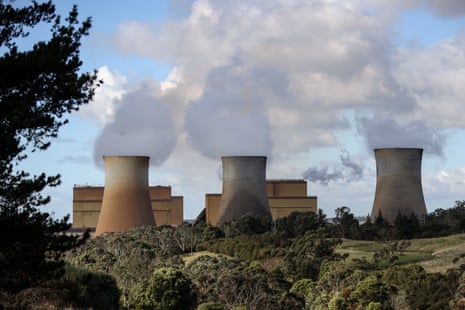
所有政党都承认,自20世纪70年代以来一直在拉特罗布谷运行的大型亚洛恩煤矿发电厂已接近使用寿命终点,其运营寿命将在不到两年后结束,该发电厂为维多利亚州提供五分之一的能源。分析人士指出,争夺州政府执政权的各政党未能妥善说明将如何填补该发电厂关闭后出现的电力缺口。维多利亚州面临的挑战因数据中心能源需求的增加以及建筑、住宅和车辆的电气化而愈发严重。专家们对由自由党领袖杰斯·威尔逊领导的联盟党批评最为严厉,该党被视为选举中的胜出者。该党表示将停止新建输电线路——这些高压电力线路对于连接新的风能和太阳能发电厂以及让维多利亚州从邻近州进口电力至关重要。
咨询公司Naru Research的蒂姆·巴克斯特称,目前“没有时间在维多利亚州开展能源领域的文化斗争”,因为现在的错误决策将会对该州经济造成“毁灭性”影响,并给家庭和企业带来巨大的账单压力。
订阅免费新闻简报,即可阅读气候与环境编辑亚当·莫顿的《清洁空气》专栏。他说,低廉的天然气价格曾助力维多利亚州实现过去的繁荣,但随着巴斯海峡的海上天然气供应急剧减少,这种优势正在迅速消失。而且没有证据表明该州在其他地方拥有足以替代的天然气资源。他指出,这导致五年内天然气价格上涨了62%,而电费则上升了18%。
由于维多利亚州对天然气的依赖程度高于其他州,巴克斯特表示,这凸显出家庭需要减少对天然气的依赖,转而更多使用可再生能源。“在2028年前投入使用的每一座风电场、太阳能电站和电池,都能减少维多利亚州在Yallourn天然气供应中断时不得不燃烧的昂贵天然气。因此,加快相关设施的建设是保护家庭免受更高费用影响的最佳途径。”他说。
工党和联盟党分别承诺了什么?据《先驱太阳报》报道的政府简报显示,维多利亚州的电力批发价格在东海岸是最低的,但家庭仍严重依赖价格昂贵的天然气。无论谁获胜,能源费用都可能上升。
联盟党表示,将取消连接维多利亚州与新南威尔士州的VNI West输电线路,并暂停墨尔本与该州西部之间的西部可再生能源输电线路建设。取而代之的是,该党将对该州的输电计划进行“简短、迅速且独立的”评估,同时考虑其他替代方案,比如在商业和工业建筑屋顶上安装太阳能发电系统。该政府还承诺“开放天然气勘探的大门”,扭转工党要求所有新住宅都使用电力的政策,并采用新南威尔士州和南澳大利亚州的模式,通过能源安全要求机制来招标新增的能源供应能力。目前没有计划改变该州的减排目标——即到2035年将温室气体排放量降至2005年水平的75%至80%以下,到2045年实现净零排放——但尚未说明将如何实现这些目标。
工党表示将继续扩建电网,推动住宅从使用天然气转向用电进行供暖和烹饪,并继续支持海上风电场的发展。但卡罗尔政府也在重新评估西部可再生能源连接项目。它最近取消了一个可再生能源区,批准了两个天然气开发项目(不过其中一个现已进入破产程序),并宣布拨款750万美元用于推动“可再生天然气产业”的发展。
“是时候加快速度了”Nexa Advisory的首席执行官斯蒂芬妮·巴希尔表示,新的输电设施对于发展可再生能源至关重要,能够在高温等电力需求高峰时期实现跨州电力输送。“现在不是取消任何在规划中的项目的时机,”她说,“现在是该加快速度、全力推进的时候。”
维多利亚州环境部门的首席执行官乔诺·拉诺兹称,联盟政府的计划——包括恢复前贝利厄-纳普廷联盟政府制定的、禁止在住宅2公里范围内建造风力涡轮机的政策——是“有史以来针对维多利亚州选民的最大欺诈行为”。
“联盟政府承诺要停止所有替代煤炭和天然气发电所必需的措施。他们提出了一些关于如何转而依赖天然气的简单口号,但实际上毫无实质内容,”他说。但分析人士表示,工党在建设能源基础设施方面的速度也不够快。咨询公司Endgame Analytics的董事总经理奥利弗·纳恩称,由于缺乏有效计划来避免能源短缺,因此“无论谁赢得选举,我们都会输”。纳恩说:“在维多利亚州,电力需求正在迅速上升,同比增长5%。煤炭正在被淘汰,而目前我们还没有真正可行的计划。”在执政的12年间,工党推动了维多利亚州可再生能源占比从10%上升至44%,同时关闭了大型黑兹尔伍德燃煤发电厂。风力发电场的数量从14个增至44个,大型太阳能发电场的数量则从2个增至57个。工党还在2021年结束了该州对传统天然气勘探的禁令。但该州的审计长表示,VNI West项目与西部可再生能源连接项目都落后于计划,很可能要等到雅洛恩发电厂按计划关闭之后才能完成。近期有人试图通过立法强制在获得环境审批之前进行土地征收,以加快进程,但这一做法在当地社区并不受欢迎。工党则表示,这些改革是必要的,旨在减少延误并提高土地所有者的确定性。颇具争议的是,工党还通过了相关法律,允许VicGrid及其承包商在无土地所有者同意的情况下进入私人土地,作为推进工程的最后手段。
维多利亚州农民联合会主席瑞安·米尔盖特表示:“每当政府遇到障碍时,他们不是重新评估相关措施并试图加以改进,而是通过修改法律来赋予自己更广泛的权力。”
影子能源部长大卫·戴维斯称这些法律为工党的“双重强力手段”,并表示联盟党将废除这些法律,并恢复土地所有者的上诉权利。
不过Nexa公司的巴希尔认为,能源政策不应成为“政治博弈的工具”。“我们确实需要支持新一代。不能再进行更多评估了,必须立刻着手行动。”
原文
Victoria’s electricity supply will be at risk when a major power plant shuts in 2028 and neither major party is offering a plan at this month’s state election to deal with it, experts have warned.
All parties concede the giant Yallourn coal plant, which has operated in the Latrobe Valley since the 1970s and supplies a fifth of Victoria’s energy, is at the end of its functional life and will shut in less than two years. Analysts say the parties vying to run the state are failing to properly explain how they will fill the power shortfall the closure will create.
The challenge facing Victoria is exacerbated by the growth in energy demand from datacentres and the electrification of buildings, homes and vehicles. Experts are most critical of the Coalition, under Liberal leader Jess Wilson, which is favoured to win the election. It says it would stop work on new transmission lines – the high-voltage power lines needed to connect new wind and solar farms and allow Victoria to import power from neighbouring states.
Tim Baxter, of consultancy Naru Research, says there is no “time for a culture war on energy in Victoria” because poor choices now would be “devastating” for the state’s economy and create bill shocks for households and businesses.
Sign up to get climate and environment editor Adam Morton’s Clear Air column as a free newsletter
He says cheap gas helped build Victoria’s past prosperity, but it is quickly running out with offshore gas supply from Bass Strait in steep decline. And there is no evidence the state has meaningful gas resources elsewhere to replace it. This has contributed to a 62% increase in gas prices in five years, he says, while electricity bills have risen by 18%.
Given Victorians rely more on gas than other states, Baxter says it underlines the need for households to move away from gas and increasingly run on renewable energy. “Every windfarm, solar farm and battery that comes online before 2028 reduces how much expensive gas Victoria has to burn when Yallourn goes. That makes speeding up the build-out the single best way to protect households from higher bills,” he says.
What are Labor and the Coalition promising?
Victoria’s wholesale electricity prices are the lowest on the east coast, but households still rely heavily on expensive gas. Regardless of who wins, energy bills are likely to increase, according to a government briefing reported in the Herald Sun.
The Coalition says it would scrap VNI West, a transmission line linking Victoria to New South Wales, and pause work on the Western Renewables Link, between Melbourne and the state’s west. Instead, it would undertake a “short, sharp and independent” review of the state’s transmission plan, which would consider alternatives, such as solar power on commercial and industrial rooftops.
It has also pledged to “throw open the doors to gas exploration”, reverse Labor’s policy of making new homes all-electric, and tender for new firming capacity with an Energy Security Requirement modelled on schemes in NSW and South Australia. There is no plan to change the state’s emission reduction targets – cutting greenhouse gas emissions by 75%–80% below 2005 levels by 2035 and reaching net zero emissions by 2045 – but it has not said how it would achieve them.
Labor says it would continue to expand the power grid, shift homes from gas to electricity for heating and cooking and continue to support the development of offshore windfarms. But the Carroll government is also reviewing the Western Renewables Link. It recently cancelled a renewable energy zone, approved two gas developments (although one has since entered administration), and announced $7.5m to kickstart a “renewable gas industry”.
‘Time to put our foot on the accelerator’
Nexa Advisory chief executive Stephanie Bashir says new transmission is crucial for developing renewable energy and allowing power to be imported across state lines at times of high demand, such as during heatwaves. “This is not the time to be cancelling any of the projects in the pipeline,” she says. “This is the time where we put our foot on the accelerator and go hard.”
Environment Victoria’s chief executive, Jono La Nauze, says the Coalition’s plan – including a proposal to reinstate a policy introduced by the previous Baillieu-Napthine Coalition government preventing wind turbines being built within 2km of dwellings – is “the greatest swindle ever attempted on Victorian voters”.
“The Coalition are promising to stop all the things that are necessary to replace our coal and gas generation. They’ve got some quick slogans for how they’re going to instead rely on gas, with absolutely no substance,” he says.
But analysts say Labor is also not building energy infrastructure fast enough.
Oliver Nunn, managing director of the consultancy Endgame Analytics, says the lack of an adequate plan to stave off an energy shortfall means that “whoever wins [the election], we lose”.
“You can see demand for electricity pulling up rapidly in Victoria, 5% year-on-year growth,” Nunn says. “Coal’s going out, and we just do not have, at this point, a really viable plan.”
In its 12 years in government, Labor has overseen a surge in Victoria’s share of renewable energy from 10% to 44% and the closure of the large Hazelwood coal-fired power station. The number of windfarms has grown from 14 to 44 and large-scale solar farms from two to 57. Labor also ended the state’s moratorium on conventional gas exploration in 2021.
But the state’s auditor general says both VNI West and the Western Renewables Link are behind schedule, and not likely to be completed until after Yallourn’s scheduled closure.
Recent attempts to fast-track the process by legislating for compulsory land acquisition before environmental approvals have been unpopular in regional communities, but Labor says the changes were needed to reduce delays and improve certainty for landowners. Controversially, Labor also passed laws to allow VicGrid and its contractors access to private land without a landholder’s consent, as a last resort to facilitate works.
“Every time the government seems to hit a hurdle, what they’ve done is not gone back and reassessed the engagement and tried to improve it, what they’ve done is changed legislation to give them broader powers,” the Victorian Farmers Federation president, Ryan Milgate, says.
The shadow energy minister, David Davis, refers to the laws as Labor’s “double bazooka powers” and says the Coalition will ditch them and reinstate landholder appeal rights.
But Nexa’s Bashir says energy policy should not be “a political football”.
“We do need to back the replacement generation. We can’t do any more reviews; we’ve just got to get on with it.”