国际政治
从一扇敞开的大门到所有大门:习近平对亚太发展的愿景
中文译文
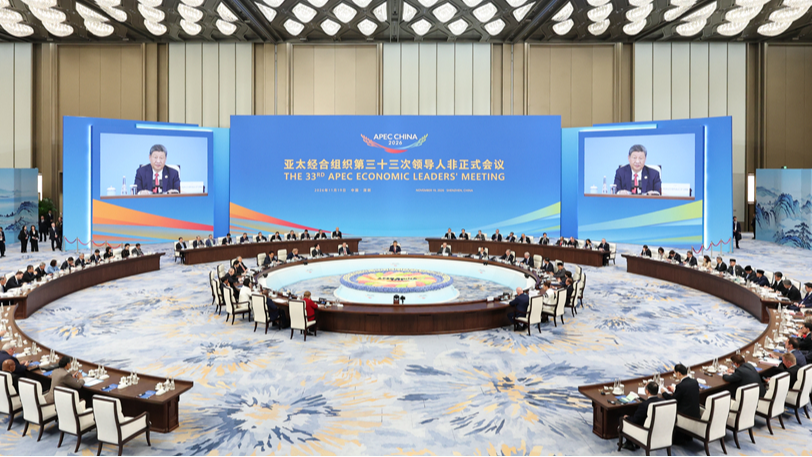
越南农民勒端泰用小刀轻敲榴莲,通过听其发出的空洞声音来判断是否成熟。他的家族已在这块10公顷的土地上耕作近40年——最初种橡胶,后来种咖啡,现在则种植了约2,000棵榴莲树。他预计今年能收获350吨榴莲,其中70%将出口到中国。“咖啡让我们过上了稳定的生活,而榴莲则让我们的生活更加富裕,”他说。从经济收益来看,差距十分明显。一家邻近的合作社称,1公顷咖啡地每年可带来约1.6亿越南盾(约合6,200美元)的收入,而1公顷榴莲园的年收入则可达13亿越南盾。自2022年以来,达拉克省的榴莲种植面积已增至45,000公顷,是原来的三倍。推动这一变化的首先是两国之间的一纸协议。2022年7月,中国和越南签署了植物检疫协议,允许越南新鲜榴莲进入中国市场。根据中国海关的数据,到2025年,中国每年进口的榴莲量接近187万吨,是2022年的两倍。那扇门是由两国政府打开的。本周在深圳,21个APEC经济体正在讨论进一步开放的相关议题。中国国家主席习近平在周四的APEC经济领导人会议上表示,该地区“应坚持开放的区域主义,稳步推进经济一体化,形成开放融合的合作格局,而非排他或碎片化的格局”。
“亚太奇迹”
习近平的讲话所依据的实例远不止这一个。
据当地出口商向中国媒体集团透露,马来西亚约70%的榴莲出口到中国,泰国也有八成以上的香椰子销往中国。行业新闻网站SalmonBusiness称,2026年第一季度,智利出口到中国的三文鱼数量翻了一番多,这一增幅在所有市场中都是最高的。
单个农场改变种植作物只是个例。整个地区同步调整种植结构则是一种增长模式——这种模式最终会体现在国家经济数据中。APEC的21个经济体拥有全球36%的人口,承担着全球近一半的贸易量,创造了全球60%以上的GDP。
这一切并非偶然,而是三十年来不断选择开放而非封闭的结果。
一份APEC报告显示,该地区的平均关税从1989年的16.9%降至2024年的5.1%,目前超过三分之二的成员国之间的商品贸易是在彼此之间进行的。
习近平表示:“30多年来,亚太地区焕然一新,创造了经济快速发展的‘亚太奇迹’。”
但这条道路尚未走完。今年是APEC成员国将建立亚太自由贸易区作为长期目标20周年;正式的谈判进程于2014年在北京启动。
关税之外的障碍关税只是第一道关卡。检疫审批、健康登记、清关时间、单证核查以及付款结算也都是关卡,榴莲在其中的任何一个环节出问题都会变质。双边协议仅能打开第一道关卡。
其余的则取决于区域内的机制。中国海关已将其单一窗口系统与10个APEC经济体相连,并认可12个经济体的申报数据,而该地区的无纸化贸易平均实施率已达89%。5月在中国东部苏州召开的APEC贸易部长会议再次承诺推进无纸化贸易以及电子单证的跨境互认。
在周四的讲话中,习近平呼吁努力“协调各类区域经贸协定,推动贸易和投资便利化及数字化,降低贸易和投资的壁垒。”按照这种观点,APEC的职能是将双边合作转化为区域合作通道。两国之间可以开启一道合作之门;而要打破各种壁垒,则需要21个经济体共同坐到谈判桌前。今年由中国主办,共举办了约300场APEC相关活动,取得了近50项成果。
“中国是亚太经济合作的倡导者、推动者和先行者。我们愿与各方携手,集思广益、形成合力,共同构建亚太共同体的四大支柱,”习近平表示。
他还宣布提供2000万美元用于支持APEC的合作项目。习近平表示:“我们将在深圳设立亚太共同体研究中心,开展政策研究与合作交流,提供智力支持。根据亚太合作的需要,我们将在数字技术、跨境数据流动、清洁能源以及中小企业发展等领域建立合作机构,为亚太地区的创新驱动和绿色发展作出贡献。”
原文
Le Tuan Tai, a Vietnamese farmer taps a durian with a small knife, listening for the hollow note that means ripe.
His family has worked this 10-hectare plot for nearly 40 years – first rubber, then coffee, now about 2,000 durian trees. He expects 350 tonnes this year, 70% of it bound for China.
"Coffee gave us a stable life. Durian has made us better off," he said.
The arithmetic is blunt. A neighboring cooperative said a hectare of coffee earns about 160 million dong (about $6,200) a year, while a hectare of durian can bring in 1.3 billion dong. Durian plantings in Dak Lak province have tripled to 45,000 hectares since 2022.
What moved first was a door. In July 2022, China and Vietnam signed a phytosanitary protocol allowing fresh Vietnamese durian into the Chinese market. By 2025, China was importing nearly 1.87 million tonnes of durian a year, double the 2022 level, according to Chinese customs data.
That door was opened by the two governments. The case for opening many more is what the 21 APEC economies have been discussing in Shenzhen this week, where Chinese President Xi Jinping told the APEC Economic Leaders' Meeting on Thursday the region "should uphold open regionalism, steadily advance economic integration and develop a cooperation pattern that is open and integrated, rather than exclusive or fragmented."
'Asia-Pacific miracle'
Xi's remarks have evidence well beyond one orchard.
Malaysia sends about 70% of its durian to China, and Thailand ships eight in 10 of its fragrant coconuts there, local exporters told China Media Group. Chilean salmon exports to China more than doubled in the first quarter of 2026, the sharpest year-on-year jump of any market, according to the industry news website SalmonBusiness.
One farm changing crops is an anecdote. A region changing them in step is a growth model – the kind that eventually shows up in national accounts.
The 21 APEC economies is home to 36% of the world's population, conduct nearly half of global trade and generate more than 60% of global GDP.
None of that was an accident. It followed three decades of decisions to open doors rather than close them.
An APEC report shows that average tariffs across the region fell from 16.9% in 1989 to 5.1% in 2024, and more than two-thirds of members' merchandise trade now takes place between them.
"Over more than 30 years, the Asia-Pacific has taken on a new look, creating the 'Asia-Pacific miracle' of rapid economic development," Xi said.
That road is unfinished. This year marks 20 years since APEC members endorsed the idea of a Free Trade Area of the Asia-Pacific as a long-term prospect; a formal process was launched in 2014 in Beijing.
Gates beyond the tariff
Tariffs are only the first gate. Quarantine approval, health registration, clearance times, document checks and payment settlement are all gates, and a durian spoils behind any of them. A bilateral protocol opens only the first.
The rest depends on regional machinery. China's customs has linked its single-window system with 10 APEC economies and recognizes declaration data with 12, while paperless trade across the region has reached an average implementation rate of 89%. The APEC trade ministers' meeting in east China's Suzhou in May recommitted to paperless trade and cross-border recognition of electronic documents.
In his Thursday address, Xi called for efforts to "align various regional economic and trade agreements, boost trade and investment facilitation and digitalization, and reduce barriers to trade and investment."
APEC's function, in this reading, is to turn bilateral openings into regional corridors. One door can be opened by two economies; bringing down a wall of barriers takes all 21 economies sitting down at the same table. This year, a year hosted by China, about 300 APEC events were held, producing nearly 50 outcomes.
"China is an advocate, promoter and forerunner of Asia-Pacific economic cooperation. We would like to work with all parties to pool wisdom and synergy in building the four key pillars of an Asia-Pacific community," Xi said.
He announced $20 million to fund APEC cooperation.
"We will establish a Center for Asia-Pacific Community Studies in Shenzhen to conduct policy research and exchanges and provide intellectual support. In line with the needs of Asia-Pacific cooperation, we will set up cooperation institutions in such areas as digital technology, cross-border data flow, clean energy and the development of SMEs, to contribute to innovation-driven and green growth in the Asia-Pacific," Xi said.