文化体育
《侠盗猎车手》需要成熟起来。它通过一个重大转折来实现这一目标。
中文译文
《侠盗猎车手6》以一个令人震惊的转折开场。这个已有29年历史的系列作品所呈现的画面,是一个手持火箭发射器炸毁警车的男子。还有用半自动步枪随意枪杀路人,或是用棒球棒将街头行人打死的场景。正如福克斯新闻数十年来反复宣扬的那样,这是一个纯粹的破坏之地,是“本我”最黑暗的体现。在这款或许堪称有史以来最受关注的电子游戏作品的前30分钟里,似乎新作也打算沿袭同样的风格。我们的主角露西娅身处一家咖啡店,处境艰难,正喝着冰水,这时她脑中突然冒出一个极其愚蠢的主意。她从后备箱里拿出一把手枪,袭击了街对面的现金兑换店。她在附近巡逻警队的注视下拿走了钱,随后一场追捕就此开始。露西娅翻越围栏、穿过小巷,但没过多久就被电击枪击中、捂住口鼻,最终被戴上手铐——被判入狱九个月。在登记之前,她恳求警察让她回去咖啡店,因为她在那里留下了重要的事物——她的幼子托马斯正在痛哭不止。就这样,《侠盗猎车手》的主角终于有了活下去的理由。
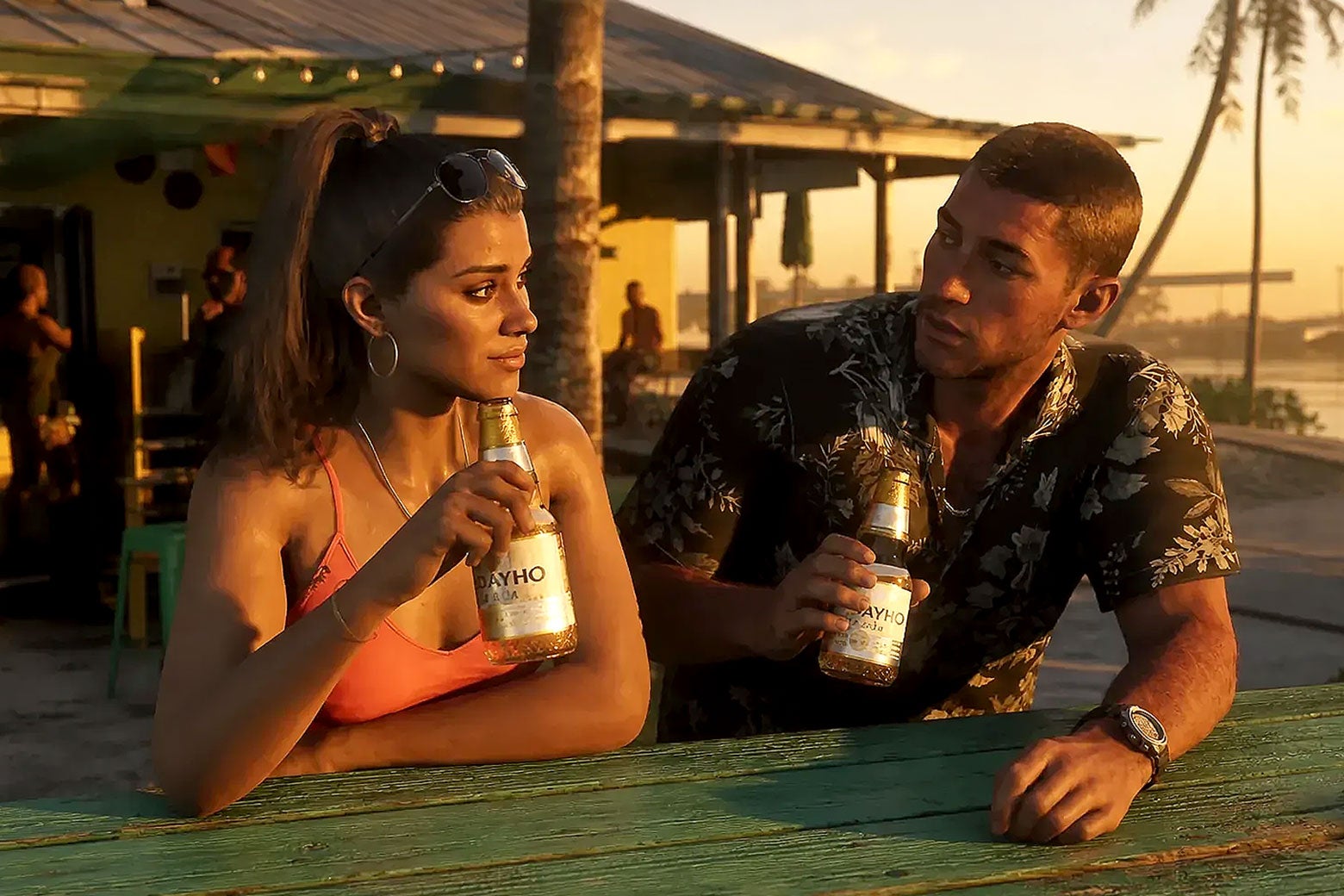
在《侠盗猎车手6》漫长的预发布阶段里,通过各种暗示、预告和隐喻,这一情节一直被保密。现代3A级视频游戏的开发流程需要极长的准备时间;前作《侠盗猎车手5》是在13年前发布的。(为了让大家有个概念,我记得自己还是大学四年级时,在一家GameStop商店购买了光盘版的游戏。)在这段漫长的等待期里,该系列的忠实粉丝们已经大致猜出了即将呈现的内容。我们知道,《GTA 6》的故事围绕着名叫露西娅·卡米诺斯的女子与她那关系时好时坏的男友杰森·杜瓦尔之间的浪漫关系展开。我们知道,游戏背景设定在充满霓虹灯色彩的迈阿密仿制品——维斯城,以及周围的沼泽地和沙洲。但最重要的是,我们知道该系列背后的游戏公司Rockstar Games早已摒弃了对虚无主义的偏爱,这一点从他们最近推出的作品中日益明显的斯科塞斯式风格中便可看出。那种疯狂的暴力元素已不再符合该公司宏大的叙事追求。无论如何,《侠盗猎车手》系列都需要成熟起来。然而,不太清楚的是《侠盗猎车手》将如何发展,或者这是否真的可能实现。该系列的核心价值观是自由,体现在允许玩家去实施他们所能想到的各种极端行为——枪击夜总会、骚扰行人、驾驶半挂车在人行道上行驶——这些行为都无关紧要,因为《侠盗猎车手》完全不加评判。但随着电子游戏行业的成熟以及Rockstar自身目标的提升,这种自由反而成了该工作室想要讲述的故事的障碍。让人想起的是2008年推出的《侠盗猎车手IV》,这是一部关于移民的冷峻故事,主角是一名南斯拉夫战争的老兵,他卷入犯罪世界主要是因为想逃离表弟那阴暗的公寓。尼科的故事基调严肃而真实——但玩家可以轻易地打破这种氛围,比如闯入企业大楼、偷走直升机,只为寻求刺激而将其撞向自由女神像。这并非能用来指责操控游戏控制器的人的理由:玩电子游戏就意味着不断挑战可能性的极限,体验它所带来的种种“放纵”方式。该游戏中的粗俗内容是其特色而非缺陷,不过是事物运作的常态罢了。
这时,托马斯出现了——这个金发少年贯穿了《侠盗猎车手6》的整个故事情节。露西娅和杰森只能通过闪回或发送到他们智能手机上的视频见到他。游戏前期剧情的推进主要围绕这个家庭如何重聚展开。露西娅需要避免再次入狱,而杰森则必须先提升信用评分并开立银行账户。与系列之前的作品不同,这里的希望之光并非某个犯罪帝国或最后一场大赚一笔的机会,而只是微弱的期望:所有针对杰森和露西娅的阴谋都会失败,他们两人能够建立一个幸福的家庭。Rockstar终于找到了办法,让那些以叛逆著称的游戏玩家产生共鸣,让他们——当然,是在没有强迫的情况下——以世界公民的身份沉浸在游戏中,让路过的NPC不再是射击目标。我想这家工作室要做的就是让我们扮演父母角色。
实际上,这意味着我在玩《GTA 6》的早期任务时尽可能选择非暴力方式。我造成的平民死亡人数为零,也希望保持这一状态。当需要采取暴力手段时,我会精心策划行动。(最近,杰森的一个卑鄙朋友让他从警方扣押的车辆中偷车。我本可以持枪冲进去,造成大量伤亡,但我选择通过绕过带刺铁丝网、偷车发动引擎,然后撞破围栏来达成目的。)这些决策会影响游戏内的一个指标,该指标根据你造成的杀戮数量来衡量你作为罪犯的“心理变态程度”。20年前,将死亡人数推高到极限或许才是目标,但在这里,这种冲动因人们意识到这会切实影响游戏结尾的呈现而有所收敛。Rockstar在2018年推出的西部史诗《荒野大镖客:救赎2》中也曾尝试过类似机制。但在那部游戏中,这种指责显得更为空洞、更具说教意味,就像是在指责玩家在玩电子游戏时太过放纵。从这个意义上说,《侠盗猎车手6》的一大成就在于Rockstar巧妙地说服了我们认真投入游戏。毕竟,还有家庭需要去守护。这一根本性的转变或许预示着大型电子游戏艺术风格的变革。早在《GTA 6》的早期章节中,杰森就被要求为露西娅出狱做准备。他安装石膏板、修理屋顶;可以给她买鲜花,甚至项链。还会去商店购买食品杂货。这些看似平常的情节却能引人入胜,这恰恰体现了该游戏无与伦比的真实感;以如此流畅的方式、如此生动的细节呈现这些场景,描绘卧室的场景着实令人兴奋。这也激怒了一些极端偏激的男性主义群体——比如注重外表的先驱Clavicular,以及极端厌女的Twitch主播Asmongold——他们对这款本世纪最伟大的电子游戏允许玩家以友善态度对待女性感到震惊。(需要指出的是,许多右翼的反应似乎是为了制造噱头来激怒自由派人士。)正如我最近在这里所写的,我确实认为男性已经准备好重新回归正常状态。)
但当我玩《侠盗猎车手6》时,我最常想的是自己现在已是一名35岁的男人,事实上美国游戏玩家的平均年龄也已上升至37岁。我们中的许多人早已摒弃了那些幼稚的幻想。如今,我们有愿意为之付出努力的妻子和女友,有自己憧憬的未来,也有需要应对的各种现实问题。我们都曾审视过自己微薄的储蓄。正因如此,我怀疑游戏玩家是否不再那么容易被《侠盗猎车手》曾经所体现的那种敌对的愤世嫉俗所影响。也许我们已经准备好与这个系列一同成长。因为,就像杰森和露西娅一样,我们也有值得为之奋斗的目标。
原文
Grand Theft Auto VI opens with a destabilizing twist. The flashbulb image of the 29-year-old franchise is a man with a rocket launcher blowing up cop cars. It is arbitrary drive-bys with semiautomatic rifles or clubbing streetwalkers to death with baseball bats. It is—as has been repeated on Fox News ad nauseam for decades—a playground of pure destruction, the darkest expression of id. And for the first 30 minutes of the latest entry, which has made history as perhaps the biggest video-game release ever, it appears as if the new installment is prepared to follow the same pattern. Our hero, Lucia, is down bad in a coffee shop, sipping on ice waters, when a desperately stupid idea crosses her mind. She retrieves a pistol from her trunk and sticks up the check-cashing joint across the street. Lucia bags the money in plain sight of a nearby patrol squad. A chase ensues. Lucia hops fences and cuts through alleyways, but before long she is tased, smothered, and eventually cuffed—sent off to prison for a nine-month bid. Before getting booked, however, she begs the officers to let her return to the coffee shop. She’s left something important there. It’s her toddler, Tomas, crying his eyes out. Just like that, a Grand Theft Auto protagonist finally has something to live for.
This revelation was kept under wraps throughout GTA 6’s long, long prerelease cycle of hints, teases, and innuendo. The nature of modern triple-A video game development necessitates supersized gestation periods; the previous entry, GTA 5, was released 13 years ago. (To put that in perspective, I have memories of purchasing it—on disc! At a GameStop!—as a college senior.) Suspended in those intermediary doldrums, avid fans of the series had sketched out a loose idea of what was in store. We knew that GTA 6 centered on a Bonnie-and-Clyde romance between a woman named Lucia Caminos and her on-again, off-again boyfriend Jason Duval. We knew that it was set in Vice City, a neon-soaked facsimile of Miami, as well as its surrounding glades and sandbanks. But most importantly, we knew that Rockstar Games, the studio behind the franchise, had long shed its fetish for nihilism, as evidenced by the increasingly Scorsesean texture in its most recent offerings. The maniac violence no longer gelled with the company’s outsized narrative ambition. One way or another, Grand Theft Auto needed to grow up.
What was less clear, however, was how Grand Theft Auto would grow up, or if it was even possible. The franchise’s founding principle is freedom, manifested by granting permission to players to pursue all the dark thoughts they can conjure. Shoot up night clubs, harass pedestrians, drive a semitruck down the sidewalk—it doesn’t matter, GTA is radically nonjudgmental. And yet, as the video game industry matured and Rockstar itself aimed higher, that freedom proved to be a problem for the kinds of stories the studio wanted to tell. What comes to mind is 2008’s Grand Theft Auto IV, a chilly immigrant saga starring a veteran of the Yugoslav Wars who gets enmeshed in the criminal underworld mostly because he’d like to escape his cousin’s dank apartment. Niko’s is a gritty, sober tale—but it could also be easily punctured by the wayward player’s ability to break into a corporate compound, steal a helicopter, and crash it into the Statue of Liberty, just for kicks. That’s not something you can hold against the person holding the controller: To play a video game is to always be poking at the outer limits of what is possible, to witness all the ways it allows you to sin. The profanity of the medium is a feature, not a bug. It’s just the way things work.
Enter: Tomas, the blond-haired child who haunts every inch of the Grand Theft Auto VI narrative. Lucia and Jason see him only through flashbacks or in videos sent to their smartphones. The crux of the early plot beats are structured around the ways and means this family can be reunited. Lucia needs to avoid recidivism, and Jason has to build up his credit score and open up a bank account in the first place. Unlike in previous entries in the series, the light at the end of the tunnel here is not a criminal empire or one last big score. Instead, it is the faint hope that all the forces conspiring against Jason and Lucia will fail, and that these two can build a happy family. Rockstar has finally found a way to engender sympathy in its notoriously anarchic players, to convince them—naturally, without coercion—to immerse themselves as citizens of the world, where passing NPCs weren’t target practice. I guess all the studio needed to do was make us parents.
In practice, that means I’ve been going about the early missions of GTA 6 as nonviolently as possible. My civilian body count is zero, and I hope to keep it that way. When I get up to dirty business, I put forth a smooth operation. (Recently, one of Jason’s dirtbag friends asked him to steal a car from police impound. I could’ve gone in guns blazing and racked up a butcher’s bill, but instead I found a work-around by sneaking past a gap in the barbed wire, hot-wiring the vehicle, and crashing through the fence.) These decisions tie into an in-game barometer that measures just how psychopathic of a criminal you’ve become, judged by the amount of carnage you’ve left in your wake. Pushing the body count past the brink would’ve been the goal 20 years ago, but here, the impulse is tempered by the knowledge that it will have a tangible impact on the ending you see when the credits finally roll. Rockstar attempted a mechanic like this in the studio’s previous release, 2018’s Western epic Red Dead Redemption 2. But there, the scolding felt more hollow, more moralistic, like a finger wagging at you for having fun in a video game. In that sense, one of the great triumphs of Grand Theft Auto VI is how subtly Rockstar has persuaded us to play ball. I mean, there is a family to fight for.
This fundamental departure might signal a shift in the artistry of video games writ large. Much has already been made of how, in GTA 6’s first chapters, Jason is tasked with preparing his home for Lucia’s imminent release from jail. He installs drywall and fixes the roofing; he can buy her flowers, or even a necklace. He purchases groceries at the store. That all of these mundanities are somehow engaging is a testament to the game’s unmatched verisimilitude; when rendered this seamlessly, with such vivid detail, painting the bedroom is genuinely thrilling. It has also aggravated some of the most eccentric fringes of the manosphere—looksmaxxing pioneer Clavicular, hardcore misogynistic Twitch streamer Asmongold—who are aghast that the biggest video game of the century would allow players to treat women with kindness. (It ought to be mentioned that much of the right-wing reaction seems like a contrived attempt to scandalize liberals. As I’ve written here recently, I do think men are ready to be normal again.)
But when I play Grand Theft Auto VI, what I think about most is that I am now a 35-year-old man, and in fact that the median age of American gamers has climbed to 37. So many of us are dispossessed of our juvenile fantasies. These days, we have wives and girlfriends whom we’d be willing to paint for. We have futures we dream about, and contingencies to manage. We have all stared into the abyss of our savings. Because of that, I wonder if gamers are less compelled by the hostile cynicism Grand Theft Auto used to embody. Maybe we are ready to grow up right alongside the series. Because, just like Jason and Lucia, we have something to live for too.