国际政治
新南威尔士州通过芒特普莱森特煤矿法案,绿党称此举是为阻止“一国党”而采取的行动。
中文译文
新南威尔士州政府在3月州选举前的最后一次议会会议中通过了特别立法,允许亨特谷的一座煤矿提高产量32%,该地区将是“一国党”争夺的关键战场。
经过周五立法委员会长时间的讨论,明斯政府与联盟党在周六凌晨1点36分投票通过决议,允许普莱森特山煤矿将年度开采量从1250万吨提高到1650万吨,这一措施将持续到2032年。
在辩论开始时,资源部长考特尼·侯索斯对上议院表示:“这是一项针对特殊情况的特殊法案。”
“做出这样的干预决定并非易事,但意义重大,”她说。“这确实反映了亨特谷地区数百名工人及其家庭所面临的严峻形势。”上个月,高等法院裁定批准该矿扩大产能、使其年度产量在2048年前提升至2100万吨的决策无效,这一裁决引发了法律界和反腐败专家、气候组织、无党派议员以及公民自由组织的强烈反对。在3比2的投票结果中,高等法院认为该州的独立规划委员会未能妥善考虑设定相关条件,以尽量减少该矿在煤炭出口并在外地燃烧时所产生的温室气体排放。尽管新南威尔士州州长克里斯·明斯表示不会绕过法院的裁决,但他随后仍宣布了这项立法,称其能在圣诞节前挽救400个就业岗位。明斯否认该立法是在规避高等法院的裁决。周五,政府和联盟党利用自身优势阻止了绿党提出的近200项法案修正案。绿党称该法案“极其罕见、史无前例且危险”。动物正义党州议员艾玛·赫斯特也反对该法案。
绿党气候事务发言人苏·希金森在议会中表示:“工党称当前情况极为特殊,认为此案独一无二,并向公众保证其他企业不应遭受同样的对待。”
“但政治上的保证无法避免开创先例。”
她指责总理是出于想要抵御“一国党”对亨特地区工党议席构成的威胁的动机。
她在周四的新闻发布会上说:“对我们来说,克里斯·明斯为何会这么做非常清楚,那是因为选举即将来临,而‘一国党’目前正是他对付的威胁。”新南威尔士州煤炭开采业的中心地带——亨特地区,正逐渐成为2027年3月州选举中的关键战场。新南威尔士州“一国党”上议院候选人、前煤矿工人斯图尔特·邦兹在2025年参加了由工党掌控的亨特联邦选区的竞选,获得了41%的得票率。该党在新南威尔士州的领袖迈克·纽曼则正在竞争由工党掌控的塞斯诺克下议院席位。
希金森对上议院表示,政府提出这项法案,其实是无视了该州“净零委员会”的建议,而该委员会认为进一步扩建煤矿与实现法定减排目标是不相容的。
“但似乎已经没人在意了。当[州长]前往亨特地区,只想着为某些人做点什么以维持自己在心中的 popularity时,法治还有什么意义呢?”她说道。
支持这项法案的联盟党称,这是“为了民众”。“这关乎MACH Energy公司在芒特普莱森特矿场的数百名工人,自最高法院在10月作出裁决以来,他们一直不确定在新的一年里是否还能保住工作,”国民党州议员莎拉·米切尔说道。她表示,“一次性失去数百个工作岗位将会对亨特地区造成毁灭性打击”。该立法将矿场扩建的审批与保障矿场工人就业的措施挂钩。为就业保障计划而向政府提供的、涉及720多名工人的数据将接受独立审计。在周三的新闻发布会上,明斯表示,相关法律程序将重新提交给土地与环境法院审议,但“如果在此期间该社区因这一决定而实际上陷入停滞,那将是一场悲剧”。“芒特普莱森特的大多数工人都住在马斯韦尔布鲁克,如果矿场关闭,仅在这个小镇,失业率就会上升5%。”他在与矿场工人以及支持该立法的矿业与能源工会的成员们交谈时说道。
“严重的腐败风险”
在周二发布的一份报告中,议会的立法审查委员会认为,芒特普莱森特相关法案将“实际上破坏”正在土地与环境法院审理中的诉讼程序,并通过取消法律救济途径来“损害程序的公正性”。
该报告还指出了所谓“亨利八世条款”带来的问题。律师兼反腐败活动家杰弗里·沃森本周警告称,这一条款会给国家带来“严重的腐败风险”。下议院的政府对该条款进行了修改,该条款原本允许当时的资源部长在涉及芒特普莱森特开发项目时凌驾于州法律之上。修改后,该条款不能再被用来阻止相关开发项目接受ICAC的调查,也无法改变规定的煤炭产量上限。
新南威尔士州自然保护委员会称,政府是“在压力之下才修改自己的煤炭开采法案的”,而绿党则认为这些修改仍不足以限制任何资源部长依据该条款可能拥有的权力。
新南威尔士州律师协会周四表示,若不进一步修改,亨利八世条款有可能“削弱法治”。
侯索斯周五在上议院表示,政府已认真考虑了各方担忧,并对该条款进行了修改,因为政府“认识到适当保障措施和问责制的重要性”。
原文
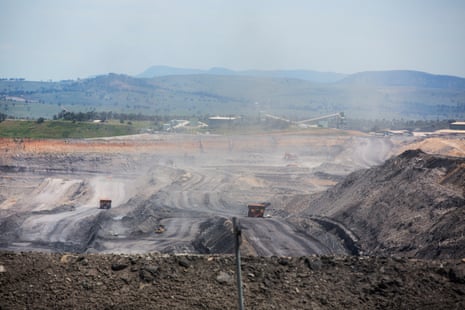
The New South Wales government has passed special legislation to allow a coalmine in the Hunter Valley to increase production by 32% in its final act of parliament before the March state election, in which the region will be a key battleground for One Nation.
After a marathon session in the legislative council on Friday, the Minns government and the Coalition voted at 1.36am on Saturday morning to allow the Mount Pleasant mine to increase its annual extraction rate from 12.5MT to 16.5MT until 2032.
At the start of debate, the resources minister, Courtney Houssos, told the upper house “this is a unique bill applying to unique circumstances”.
“Taking the decision to intervene in the way we have is not an easy one, but it is an important one,” she said. “And it does reflect the gravity of the situation facing hundreds of workers and their families in the Hunter.”
The legislation has drawn outcry from legal and anti-corruption experts, climate groups, crossbenchers and civil liberties organisations, after the high court ruled last month that an approval for an expansion that would increase the mine’s annual output to 21MT until 2048 was invalid.
In a 3-2 split ruling, the high court found the state’s Independent Planning Commission (IPC) failed to properly consider imposing conditions to minimise greenhouse gas emissions that would be generated by the mine when the coal is sold and burned overseas.
Despite saying he would not bypass the court’s decision, the NSW premier, Chris Minns, subsequently announced the legislation, claiming it would save 400 jobs ahead of Christmas. Minns has rejected the idea the legislation goes around the high court decision.
On Friday, the government and Coalition used their numbers to block almost 200 amendments to the bill sought by the Greens, who called the legislation “exceptional and unprecedented and dangerous”. Animal Justice party MLC Emma Hurst also opposed the bill.
“Labor describes the circumstances as exceptional, says this case is unique, and assures the public that other companies shouldn’t expect the same treatment,” the Greens climate spokesperson, Sue Higginson, told the parliament.
“But a political assurance offers no protection against the precedent being set.”
She accused the premier of being motivated by a desire to withstand a threat from One Nation to Labor seats in the Hunter.
“It’s very clear to us why Chris Minns has gone here, and that is because we’re really on the eve of an election, and One Nation is right now his threat,” she said at a press conference on Thursday.
The Hunter region, the centre of NSW’s coalmining industry, is emerging as a key battleground at the March 2027 state election. The One Nation NSW upper house candidate and former coalminer Stuart Bonds contested the Labor-held federal seat of Hunter in 2025, winning 41% of the two-candidate preferred vote. The party’s NSW leader, Mike Newman, is running in the Labor-held lower house seat of Cessnock.
Higginson told the upper house that in bringing the bill, the government had turned its back on the advice of the state’s Net Zero Commission, which has said further coalmine expansions are incompatible with meeting legislated emissions reduction targets.
“But who seems to care any more? What does the rule of law matter when [the premier] visits the Hunter and decides he needs to do something for someone so that he can remain somewhat popular in his own mind?” she said.
The Coalition, which supported the bill, said it was “about people”.
“It’s about the hundreds of workers at MACH Energy’s Mount Pleasant mine who, since the high court handed down its decision in October, have been left wondering whether they will still have a job in the new year,” Nationals MLC Sarah Mitchell said.
She said “losing hundreds of jobs in one go would completely devastate the Hunter region”.
The legislation ties consent for the mine expansion to a jobs guarantee protecting workers at the mine. Data provided to the government by the mine for the jobs guarantee, which covers more than 720 workers, is subject to an independent audit.
At a press conference on Wednesday, Minns said the legal proceedings would return to the land and environment court for consideration, but it would be “a tragedy if, in the meantime, that community effectively shut down as a result of this decision”.
“Most of the workers from Mount Pleasant live in Muswellbrook, and if the mine closed, the unemployment rate would jump by 5% just in that small town,” he said, speaking alongside workers at the mine and the Mining and Energy Union, which has welcomed the legislation.
‘Serious corruption risk’
In a report published on Tuesday, the parliament’s legislation review committee found the Mount Pleasant bill would “effectively undermine” proceedings that were still before the land and environment court and “would undermine procedural fairness” by removing avenues for legal challenge.
That report also highlighted concerns with a so-called Henry VIII clause that the barrister and anti-corruption campaigner Geoffrey Watson warned this week posed a “serious corruption risk” to the state.
The clause, allowing the resources minister of the day to override state laws as they apply to the Mount Pleasant development, was amended by the government in the lower house. Following the amendments, it cannot be used to prevent development from being subject to Icac investigations or to change the permitted coal production limit.
The Nature Conservation Council of NSW said the government had been “embarrassed into amending its own coalmining bill”, while the Greens said the amendments did not go far enough to constrain the power any resources minister might hold under the clause.
The Law Society of NSW said on Thursday it was concerned that without further amendments, the Henry VIII clause risked “undermining the rule of law”.
Houssos told the upper house on Friday the government had carefully considered concerns and moved amendments to the clause because it “recognises the importance of appropriate safeguards and accountability”.