国际政治
COP31国际会议与会者赞赏中国在全球绿色转型中的作用
中文译文
在土耳其安塔利亚举行的《联合国气候变化框架公约》第31次缔约方大会(COP31)上,国际与会者表示,中国对绿色发展的承诺不仅推动了自身的转型,也为全球气候治理和可持续发展作出了重要贡献。
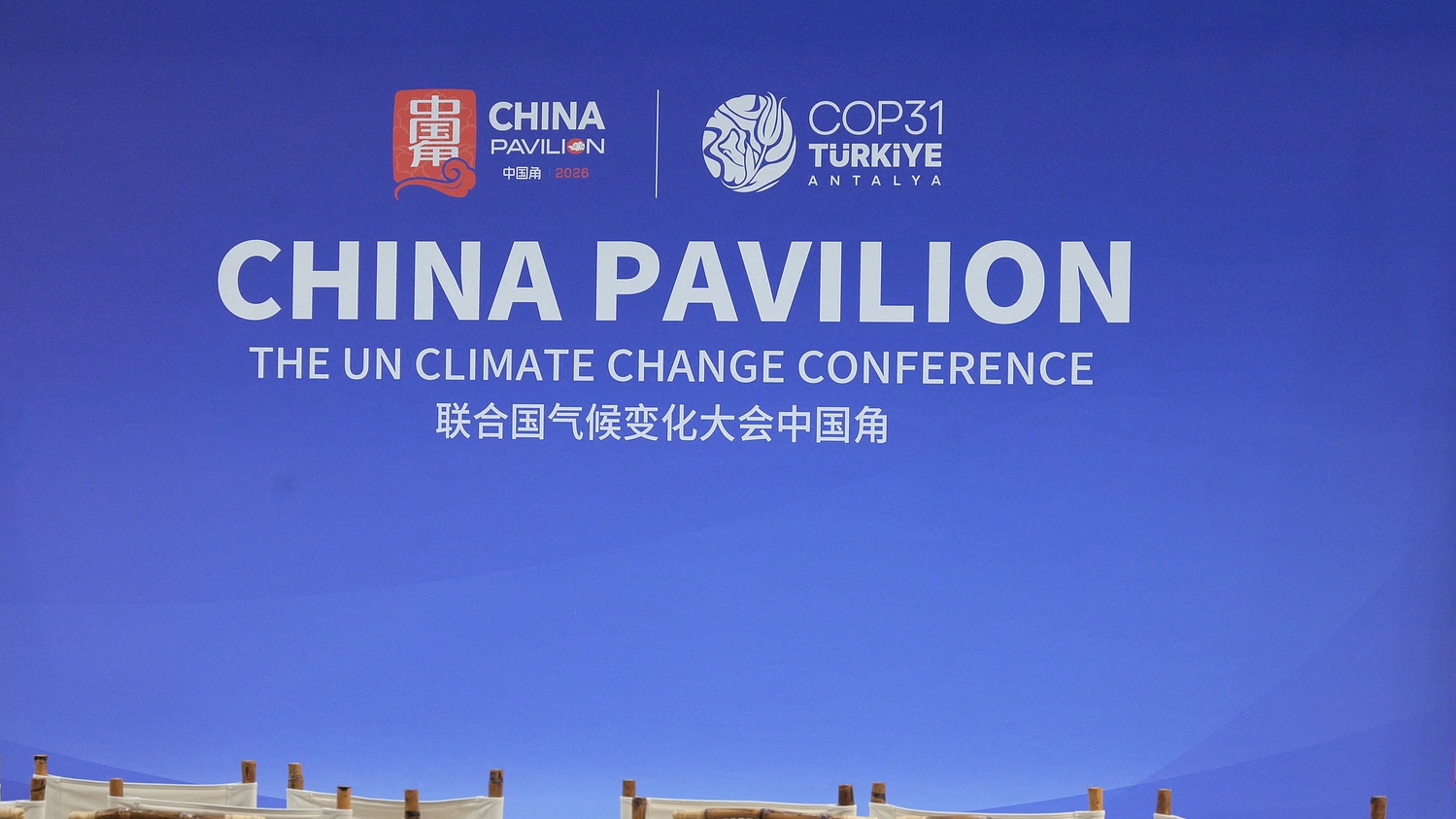
随着大会进入后半段,中国馆每天都会举办四到五场边会和特别活动。
来自世界各地的政府、大学和非营利组织的代表聚集在中国馆,探讨沙漠化控制与生态修复、绿色低碳转型与国际合作等议题,同时对中国在应对气候变化方面的政策和行动给予了积极评价。如何运用科学为决策提供依据,并通过合作推动绿色转型,一直是近期该展馆交流中的重要话题。
国际与会者认为,中国在生态治理方面的经验价值在于其长期的承诺、科学的决策方式,以及将生态改善与经济发展相结合的思路。
“中国的经验表明,转型与能源安全可以相互促进。2025年,中国在全球能源需求增长中仍占据最大份额。但由于可再生能源的快速发展以及能效提升,这一增长需求中有很大一部分得到了满足,”国际能源署副执行主任玛丽·伯斯·沃里克说道。
“煤炭需求保持平稳,与能源相关的二氧化碳排放量也有所下降,考虑到中国2030年和2060年的燃料碳排放目标,这一进展十分令人鼓舞,”她补充说。“中国是世界上最早意识到生态修复关乎人民生计、就业以及经济繁荣的国家之一。中国已经形成了一种综合性的生态修复方法,将所有这些因素综合考虑,从而实现真正有效、能够持久并产生长期影响的生态修复,”《联合国防治荒漠化公约》首席科学家巴伦·约瑟夫·奥尔说道。
如何让更多发展中国家从绿色转型带来的机遇中受益,也是中国馆讨论的重点话题之一。
“中国的举措是非常重要的步骤,它为我们指明了在可再生能源、清洁技术以及电气化方面全球应努力的方向,”国际非政府环保组织绿色和平组织国际部的临时执行主任贾斯珀·因文托尔表示。“没错,我们认为中国在能源转型方面起着非常重要的作用,是发展中国家摆脱化石燃料依赖的伙伴,因为相关技术就在中国。但南南合作也应当从这里展开,”这位发明家说道。
阅读更多:COP31代表们:中国证明了绿色增长是可行的
原文
China's commitment to green development has not only driven its own transformation but also made significant contributions to global climate governance and sustainable development, said international participants at the 31st Conference of the Parties (COP31) to the United Nations Framework Convention on Climate Change (UNFCCC) in Antalya, Türkiye.
As the conference enters its second half, the China Pavilion is hosting four to five side events and special activities each day.
Representatives from governments, universities and non-profit organizations around the world have gathered at the China Pavilion to discuss topics such as desertification control and ecological restoration, green and low-carbon transition and international cooperation, while offering positive assessments of China’s policies and actions in addressing climate change.
How to use science to inform decision-making and advance the green transition through cooperation has been a key topic of recent exchanges at the pavilion.
International participants believe that the significant value of China's experience in ecological governance lies in its long-term commitment, scientific decision-making and the integrated consideration of ecological improvement and economic development.
"China's experience shows how transitions and energy security can reinforce each other. In 2025, China still accounted for the largest share of global energy demand growth. But a large share of this growth was met, thanks to the rapid expansion of renewables and efficiency gains," said Mary Burce Warlick, deputy executive director of the International Energy Agency.
"Coal demand was flat and energy related CO2 emissions fell, which is very encouraging in view of China's fuel carbon goals for 2030 and 2060," she said.
"China was among the first countries in the world to realize that restoration is about people, it's about livelihoods, it's about jobs, it's about thriving economies. And China has perfected a landscape approach to restoration that looks at all of these together so that you end up with restoration that works, that stays, that actually has long term impact," said Barron Joseph Orr, chief scientist for the United Nations Convention to Combat Desertification.
How to enable more developing countries to benefit from the opportunities presented by the green transition was also a key topic of discussion at the China Pavilion.
"China initiatives are very important steps and it really points us to the direction of what we need to do in terms of renewable energy, clean technology and electrification that needs to happen in the rest of the world," said Jasper Inventor, interim executive director of Greenpeace International, an international non-governmental environmental organization.
"Yes, we believe China is a very important energy transition, and transitioning away from fossil fuel partner for developing countries, because that's where the technology is. But that's where also the South-South cooperation needs to come from," Inventor said.
Read more: COP31 delegates: China proves green growth is possible