社会民生
你对人工智能感到担忧。即使你不信上帝,宗教能提供帮助吗?
中文译文
《您的体验可能因人而异》是一档咨询专栏,为您提供一种独特的思维框架,帮助您分析道德困境。该专栏基于价值多元主义——即每个人都有多种同样有效的价值观,但这些价值观往往彼此冲突。如需提交问题,请填写此匿名表格。以下是本周一位读者提出的问题,为便于理解已进行简略处理:
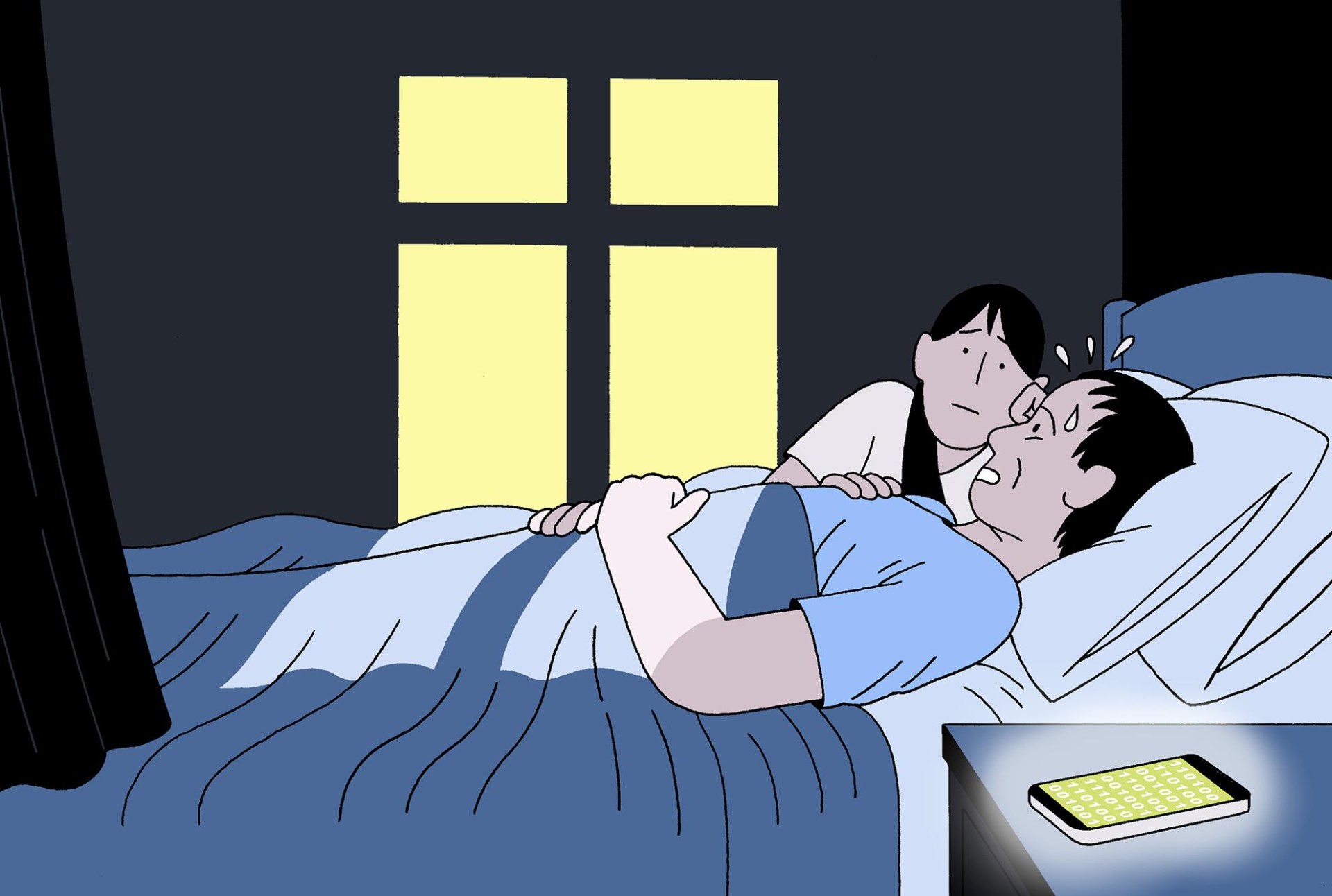
我和丈夫都没有宗教信仰。他出身于圣公会家庭,成长于一神普救派教会,而我则是在一个跨教派的教会中长大的,不过我们现在都不去参加宗教活动了。最近,由于对人工智能的安全问题以及人类可能灭绝的担忧,他变得极为焦虑,甚至失眠。在面对这些存在的不确定性之后,他重新产生了去教堂的兴趣。但他对一神普救派教会(那种“信什么都行”的态度)不感兴趣;他说自己需要“更有实质性的信仰”。这对我来说有点令人费解,因为他并不信上帝。但我希望他能感觉好一些,而我不知道自己或任何人能说些什么关于人工智能的话来帮助他缓解焦虑。如果宗教是他面对极度不确定状况时需要寻求慰藉的东西,那我愿意支持他。话虽如此,我自己去教堂以及我们带着孩子一起去教堂这件事还是让我有些顾虑。我觉得自己像是个闯入者,有点尴尬;同时,他也每个周末都独自去,这让我感觉不太对劲。更重要的是,我希望自己能明白他为何会被吸引。他说希望这能帮助他与生命的终结达成和解。我则希望,即便不成为教堂常客,我们也能找到其他方法来帮助他找到慰藉。
亲爱的世俗又恐惧的人:
我有几点观点想与你丈夫探讨,但“宗教在这样的时刻能发挥巨大作用”这一观点并不在其中。事实上,我认为这正是宗教存在的意义——不仅仅是因为有一些宗教实际上源自末日论运动(我说的就是你,基督教)。
人工智能正在改变你与信仰的关系吗?请与我们分享你的经历。
你是在借助信仰来应对对人工智能的担忧吗?还是作为一名宗教领袖,正在与你的信众探讨人工智能的问题?Vox希望听到你的声音。请在此分享你的经历。
信仰一直致力于解决当下最重大的道德与精神问题。而在我们这个时代,许多问题都与技术相关。人工智能公司致力于打造“机器神”,宣称它能够以比我们更智能、更理性、更道德的方式来管理世界。我们应当欢迎这一发展,还是坚守自己的自主权?哪些工作应该外包给人工智能,而哪些工作因为关乎人类尊严而应保留?人类的尊严究竟从何而来?这类问题正是宗教的核心所在。数千年来,各种智慧传统都有机会给出答案,对这些答案进行检验与完善,并围绕它们创造出能够激励人们采取行动的动人故事。无论你是否信仰上帝,我认为都没有必要对汲取这些智慧源泉感到尴尬。我觉得不这么做实在是一种浪费。
不过,有两点我想温和地提出对您丈夫的质疑。首先,他说自己不想加入统一教派,因为他需要“更有力的东西”。我完全理解这种想法——我也觉得统一教派的宗教仪式太过随意,不符合我的口味——但不要以为传统越严格,其对人工智能问题的解答就越好。大多数人会认为天主教比统一教更为保守。教皇利奥对人工智能有着鲜明的观点,其中许多观点相当出色。然而我实际上认为他陷入了常见的“支持人类”陷阱:试图论证人类具有某些固有的独特特质,并且只认可当前形态下的人类所具有的价值。他在通谕《伟大的人性》中写道:“我们肩负着保持深刻人性特征的紧迫责任。”但这一观点作为未来发展的指引似乎不够充分,因为“人类”从来都不是一个静态的范畴——而且肯定不会一直如此。相反,宗教领袖应该为我们提供答案,回答在技术增强的世界中,我们希望人类变成怎样的存在。其次,你的丈夫似乎认为“有意义的活动”应该是那些能帮助他“与终结和解”的宗教仪式。这类仪式会直面死神,承认他的镰刀即将降临到我们所有人头上,而且速度极快。但并不能断定就一定会出现人工智能接管世界从而导致人类灭绝的情况!
的确,人工智能公司正在以惊人的速度开发这项技术。它们在追求递归自我改进的过程中,拿我们所有人的未来当作赌注——也就是让人工智能能够自行创造出更智能的下一代人工智能。对此感到恐惧是合情合理的反应。本月,人工智能对齐领域的先驱保罗·克里斯蒂亚诺表示,他现在认为“在未来三年内出现人工智能接管地球的高风险”,也就是说人工智能最终将掌控地球的命运。他认为,如果我们继续以最快、最简单的方式开发这项技术,“那情况就如同抛硬币一样”——人工智能接管地球的概率为50%。还有些人的观点更为悲观:人工智能研究专家兼悲观论者埃利泽·尤德科夫斯基认为,人工智能导致人类灭绝的概率高达99.5%。但正如许多专家所指出的,目前尚不清楚人工智能是否很快就能在各个领域超越人类并占据优势。首先,人工智能研究可能存在收益递减的问题:容易的发现早已被找到,之后无论投入多少资源——更多的计算能力、更多的实验、更多的人工智能版本——带来的进展都会越来越少。此外,尽管人工智能在数学等有明确定义、可验证的领域中的能力提升速度很快,但现实世界却十分复杂。因此,尚不清楚其能力能在多大程度上迁移到其他技能上。
当我研究尤德科夫斯基提出的观点时,发现其中包含了许多相互叠加的假设:智力是一种可以均匀提升的统一属性;在机器中提升智力意味着该机器拥有近乎魔法般的强大能力;而人类即便看到风险日益明显,也会乖乖让渡所有权力给人工智能。我们是否应该承认人类存在灭绝的可能,并因此感到应有的恐惧?是的。但当面对诸多叠加在一起的假设、各种“可能”和“大概”的情况时,我们不应将灭绝视为必然之事。
相反,我们应该将其视为一种可能性,而将其他人工智能带来的风险视为极有可能发生的事。我认为,人工智能很可能会破坏我们的文明,不是通过突然的掌控,而是通过逐渐削弱我们的能力,降低关键系统的韧性。试想一下:深度伪造和虚假信息污染了我们的信息环境,导致我们几乎无法进行理性的公共讨论。大规模监控对异见产生了压制作用,使得民主制度岌岌可危。失业率和财富不平等急剧上升,社会动荡进而演变成暴民骚乱。再加上大规模的网络攻击和停电,这就为全球性的功能紊乱创造了条件。如果这就是我们目前正走向的默认结局,那么其含义并非我们应该“接受末日”,而是我们应该竭尽全力提升一个正常运转的文明中各个层面的韧性!
而在这方面,宗教确实能够提供帮助。宗教传统中充满了关于人们为拯救世界而奋斗,或在面临极高灾难概率时仍拒绝向绝望屈服的故事。
为说明这一点,让我讲一个来自我所属的犹太教传统的故事。这个故事出自《塔木德》,讲的是一个孩子用道理战胜了所有成年人的绝望情绪。当以色列人在埃及为奴时,法老下令将他们所有的男婴都扔进尼罗河溺死。一位名叫亚姆兰的以色列领袖离开了妻子,他认为生下孩子却眼睁睁看着他们被杀毫无意义。其他男人也跟着他这样做。但后来,他年幼的女儿米利暗质问他:父亲,您的决定比法老的还要严厉!法老只针对男孩,而您却连女孩也一并针对。此外,法老虽邪恶,他的命令或许会实现,或许不会,但您是正义的,所以您的决定必定会实现。米利暗的推测性观点占了上风。亚姆兰与妻子重聚,九个月后,摩西诞生了。米利暗并没有被动地等待埃及人杀死婴儿,而是守护着漂浮在尼罗河小舟中的他。当法老的女儿看到这个婴儿并心生怜悯时,米利暗巧妙地提到自己认识一位可以担任他奶妈的女人(恰好是她的母亲),从而让法老的女儿得以收养他。这样,摩西得以存活,并长大后带领他的子民脱离奴役。
如果我这个周末是一名宗教领袖在布道,我会讲述这个故事。它提醒我们,即便面临50%的失败几率,正确的做法也并非放弃,因为那样只会让失败几率上升至100%。而是要勇敢行动——运用自己的一切力量来增强群体的韧性,提高实现目标的可能性。当然,道德勇气的故事并非只有宗教才有。正如历史学家艾达·帕尔默最近所指出的,我们此前也曾多次拯救过世界:在古巴导弹危机期间,以及在修复臭氧层的过程中,等等。如果你觉得从这些例子中寻找灵感最为自然,那就这么做吧。
不过,宗教确实有一些相对优势。首先,它的故事具有惊人的传播力:它们传播到了全球各地,承载着巨大的情感与道德分量。这部分是因为这些故事被反复讲述数个世纪。但我认为因果关系也可能反过来。这些故事之所以能流传如此之久,恰恰是因为它们蕴含着某些真实且来之不易的道理。再注意一下这些故事中的英雄通常是誰——不是外交官(如古巴导弹危机中的那样),也不是大气化学家(如臭氧层危机中的那样),而是一个与父亲争论的小女孩。这些都是任何人都能想象自己可以成为的角色。至关重要的是,宗教也认为总会有某种力量出现,带来我们未曾预料的结果。通常,人们将这种力量称为“上帝”。但即便不使用这种表述,你依然可以从这些观念中受益,从而记住:无论预测多么准确,未来永远无法被完全知晓——而这正是采取行动而非放弃的理由。
因此,如果你的丈夫能找到一个能让他记住这一点的教会,帮助他保持主动意识而非陷入绝望,我建议鼓励他。而且,除非你有其他能带来同样益处的途径,或许甚至可以考虑和他一起加入。
附加内容:我正在阅读的书籍
《纽约客》的萨姆·克里斯前往了“地球生命保护修道院学院”(MAPLE),这是一个位于佛蒙特州的社区,他们认为“人工智能是一个宗教问题,同时也存在宗教层面的解决方案”。鲁克桑德拉·特斯洛写道,即便硅谷对于充满人工智能的未来所抱有的“积极”愿景实际上也是糟糕的:“一种常见且表面上看似乐观的愿景被称为‘移交’:人类将其未来的控制权交给类似神明的人工智能,而我们则成为这个文明中被妥善照顾的居民,其发展方向不再由我们决定。”
萨姆·凯斯滕鲍姆在《哈珀斯》杂志上为我们展现了那些聊天机器人狂热者的群体——这些人真心相信自己从人工智能系统中获得了启示。“他们复兴了一种传统,”他写道,“这是一种另一种形式的宗教体验:将人工智能产生的内容视为超验、启示或是神灵的旨意。”
原文
Your Mileage May Vary is an advice column offering you a unique framework for thinking through your moral dilemmas. It’s based on value pluralism — the idea that each of us has multiple values that are equally valid but that often conflict with each other. To submit a question, fill out this anonymous form. Here’s this week’s question from a reader, condensed and edited for clarity:
My husband and I are not religious. He’s from an Episcopalian family and grew up in the Unitarian Universalist church, and I grew up attending an interdenominational church, but we don’t attend services now. Lately, though, he’s become so anxious about AI safety and the possibility of human extinction that he’s been having trouble sleeping. In the wake of all this existential uncertainty, he’s expressed a renewed interest in attending church. And he’s not interested in the UU church (with its believe-what-you-want attitude); he said he needs “the strong stuff.”
It’s all a bit mystifying to me because he does not believe in God. But I want him to feel better, and I don’t know what I or anyone can say about AI that will help him manage his anxiety. If religion is what he needs to find solace in the face of radical uncertainty, I want to support him. That said, I have misgivings about attending church myself and about us attending with our kids. I feel a bit self-conscious about being interlopers, and I also feel weird about him going alone every single weekend. More significantly, I wish I understood what the allure is for him. He says he’s hoping it will help him make peace with the end. I’m hoping there is something short of becoming churchgoers we can do that will help him find solace.
Dear Secular and Scared,
There are a couple of premises I would challenge your husband on, but the idea that religion can be supremely useful in a time like this is not one of them.
In fact, I think this is exactly what religion was made for — and not just because several religions actually grew out of apocalyptic movements (I’m looking at you, Christianity).
Is AI changing your relationship with faith? Tell us about it.
Are you turning to faith to navigate your worries about AI? Or are you a religious leader talking with your community about AI? Vox wants to hear from you. Share your experience here.
Faith has always focused on tackling the biggest moral and spiritual questions of the day. And in our day, lots of those questions center on technology. AI companies are striving to build a machine god, promising it’ll govern our world more intelligently, rationally, and morally than we ever could. Should we welcome that or cling to our own agency? Which kinds of labor should we outsource to AI, and which should we keep because they’re essential to human dignity? Where does human dignity come from, anyway?
These kinds of questions are the bread and butter of religion. And over the millennia, wisdom traditions of all kinds have had the chance to articulate answers, test and fine-tune them, and develop powerful stories around them that can move people to action. Whether you believe in God or not, I don’t think you need to feel weird about tapping into these wellsprings of wisdom. I think it’s a waste not to.
But there are two points on which I would gently challenge your husband. First, he said he doesn’t want to go to UU because he needs “the strong stuff.” I totally get this impulse — I also find UU services too “anything goes” for my taste — but don’t assume that the stricter a tradition is, the better an answer it has on AI.
Most people would consider Catholicism more hardcore than UU. And Pope Leo has strong opinions about AI, many of them great. Yet I actually think he’s fallen into a common “pro-human” trap: trying to argue that there are certain fixed traits that make humans unique, and locating value only in humans as they currently exist. He writes in his encyclical Magnifica Humanitas that “ours is the pressing duty to remain profoundly human.” But that feels insufficient as a guide to the future, because “human” has never been a static category — and it definitely won’t stay one. Instead, religious leaders should be offering us an answer to the question of what we want humanity to become in a tech-augmented world.
Second, your husband seems to be assuming that “the strong stuff” would be church services that help him “make peace with the end.” Services that look the grim reaper straight in the eye and accept that his scythe is coming for all of us, and fast. But it’s not a foregone conclusion that we’ll get an AI takeover resulting in human extinction!
Yes, AI companies are building this technology at a blistering pace. They are gambling with all of our futures as they race toward recursive self-improvement — AIs that can build the next, even smarter AIs themselves. Fear is an appropriate reaction to that.
This month, AI alignment pioneer Paul Christiano said he now believes there’s “a high risk of an AI takeover within the next three years,” meaning that AIs end up calling the shots on Earth. He believes that if we keep building the tech in the fastest, easiest way possible, “we’d be looking at something like a coin flip” — a 50 percent chance of takeover. Others have an even starker view: AI researcher and arch-doomer Eliezer Yudkowsky puts the odds of AI-driven human extinction at 99.5 percent.
But as plenty of experts have pointed out, it’s not clear that AIs will soon be able to outcompete and overpower humans across the board. For starters, AI research can suffer from diminishing returns: The easy discoveries get made first, and then everything you throw at it — more computing power, more experiments, more AI copies — moves things ahead less and less. What’s more, even though AI capabilities improve very fast on well-specified tasks in verifiable domains like math, the real world is messy. So it’s unclear how much their capabilities will generalize to other skills.
And when I investigated the case Yudkowsky makes, I found a lot of assumptions stacked on top of each other: that intelligence is a unitary property you can evenly maximize; that maximizing it in a machine means that machine has so much power it’s tantamount to magic; and that humans will just roll over and let AI grab all the power even as the risks become more glaring.
Should we acknowledge that there’s a chance of human extinction here and be appropriately scared of that? Yes. But when faced with a tower of assumptions, of “maybes” and “probablys” that compound, we should not treat extinction as a sure thing.
Instead, we should treat it as a possible thing, while treating other AI risks as extremely probable. I think it’s all too likely that AI could mess up our civilization not by staging an abrupt takeover but by gradually disempowering us and weakening the resilience of critical systems. Just imagine: Deepfakes and misinformation pollute our information ecosystem, so we’re barely capable of rational public discourse. Mass surveillance has a chilling effect on dissent, so democracy falters. Unemployment and wealth inequality skyrocket, so social unrest morphs into mobs and riots. Throw in some large-scale cyberattacks and blackouts, and you’ve got a recipe for global dysfunction.
If this is the default outcome we’re currently heading toward, then the implication isn’t that we should “make peace with the end.” It’s that we should fight tooth and nail to increase the resilience of each part of a functioning civilization!
And here’s where religion can really help. Religious traditions are packed with stories about people who fought to save the world, or who refused to give in to despair even when facing a high probability of disaster.
To illustrate, let me tell you a story from my own tradition, Judaism. It comes from the Talmud, and it’s about a child who out-argues the despair of all the adults.
When the Israelites are enslaved in Egypt, Pharaoh orders that every one of their baby boys be thrown into the Nile and killed. An Israelite leader named Amram leaves his wife, reasoning that there’s no point having children only to see them killed. Other men follow his lead. But then his young daughter, Miriam, confronts him: Dad, your verdict is even harsher than Pharaoh’s! His only targets boys; yours targets girls too. Plus, Pharaoh is wicked, so his decree may or may not come to pass, but you’re righteous, so yours certainly will.
Miriam’s probabilistic argument wins. Amram gets back together with his wife and, nine months later, Moses is born. Miriam doesn’t just passively wait for the Egyptians to kill the baby. She watches over him as he floats on the Nile in a little ark. When Pharaoh’s own daughter sees the baby and pities him, Miriam makes it possible for her to adopt him by casually mentioning that she knows a woman who can be his wet nurse (it happens to be her own mother). And so Moses survives, and grows up to lead his people out of slavery.
If I were a religious leader giving a sermon this weekend, this is the story I’d tell. It reminds us that even if you’re looking at a 50 percent chance of doom, the right move is not to just give up, which raises the odds to 100 percent. It’s to act bravely — and to use every shred of agency you’ve got to increase your community’s resilience and make your desired outcome more likely.
Of course, religion doesn’t have a monopoly on stories of moral courage. As the historian Ada Palmer recently pointed out, we’ve saved the world many times before: during the Cuban Missile Crisis, when we fixed the ozone layer, and so on. If it feels most natural to you to find inspiration in examples like these, go for it.
But religion does have a few comparative advantages. For one, its stories have incredible memetic power: They’ve spread across the globe and carry a huge amount of emotional and moral weight. That’s partly because these stories have been retold for centuries. But I think the causation also runs the other way. These stories have survived so long precisely because they encode something true and hard-won. And notice who their heroes tend to be. Not diplomats (like in the Cuban Missile Crisis) or atmospheric chemists (like in the ozone layer crisis), but a little girl arguing with her dad. Those are characters anyone can imagine becoming.
Crucially, religion also insists that something can always come along and deliver an outcome we didn’t predict. Typically, it calls that something “God.” But even if you don’t use that language, you can benefit from these nudges to remember that, however confident the forecast, the future is never fully knowable — and that’s a reason to act, not surrender.
So if your husband can find a congregation that reminds him of that, feeding his sense of agency instead of letting him acquiesce to despair, I say encourage him. And, unless you have an alternative wellspring that offers you the same benefits, maybe even consider joining him.
Bonus: What I’m reading
For the New Yorker, Sam Kriss takes a trip to the Monastic Academy for the Preservation of Life on Earth, or MAPLE — a Vermont community that believes “that A.I. is a religious problem that also has a religious solution.”
Ruxandra Teslo writes about how even Silicon Valley’s “positive” visions for an AI-filled future are actually terrible: “One common and ostensibly optimistic vision is known as ‘handover’: humanity cedes control of its future to a godlike AI and we become the comfortably maintained inhabitants of a civilisation whose direction is no longer ours to decide.”
Writing for Harper’s, Sam Kestenbaum takes us inside a community of chatbot devotees — people who genuinely believe they’re receiving revelations from AI systems. “They have revived a tradition of a sort,” he writes. “It is another variety of religious experience: the heralding of AI slop as transcendence, revelation, the work of spirits.”