军事·安全
神秘类似MQ-25“黄貂鱼”的中国无人机现身鲜为人知的飞行测试中心
中文译文
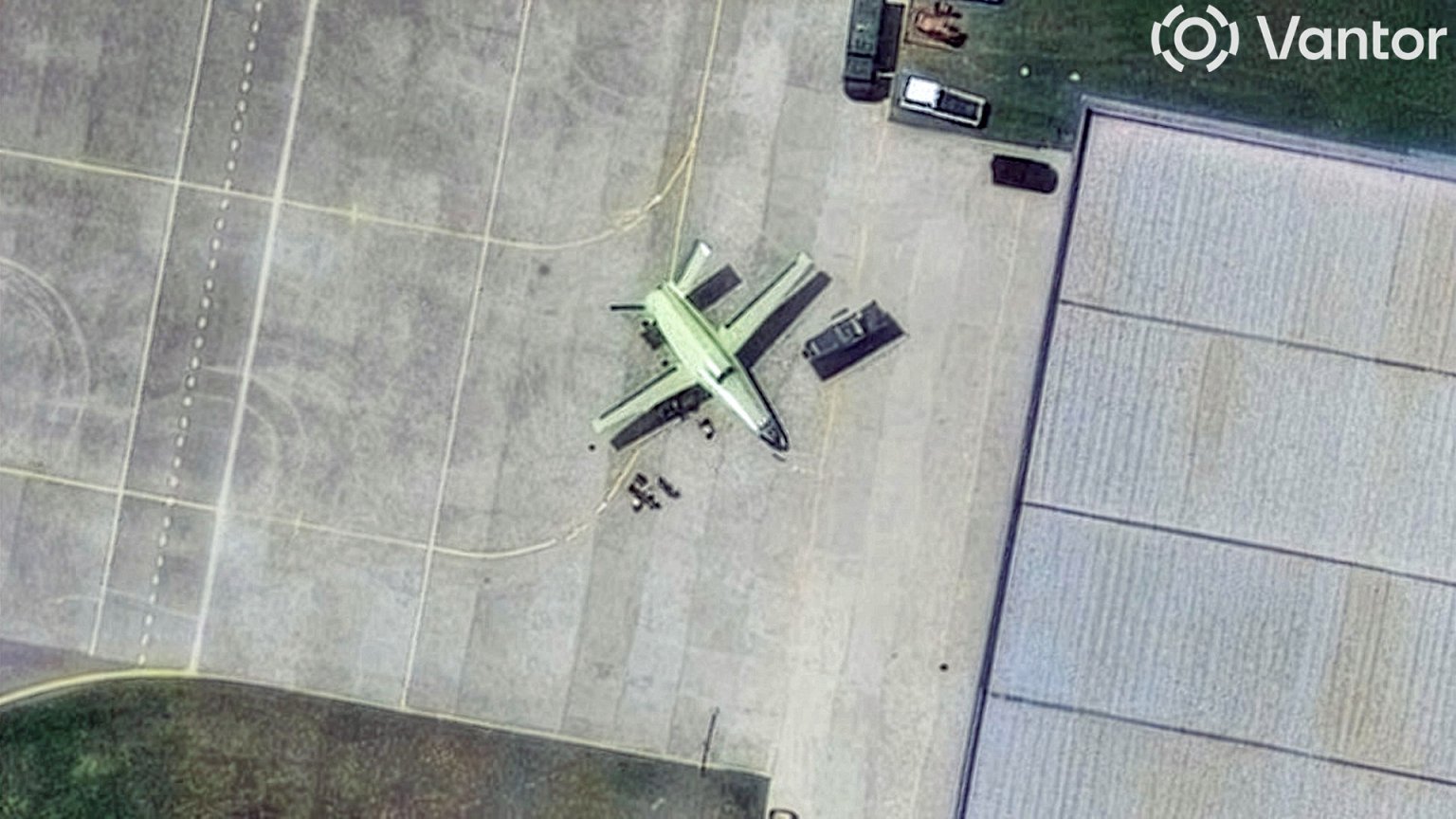
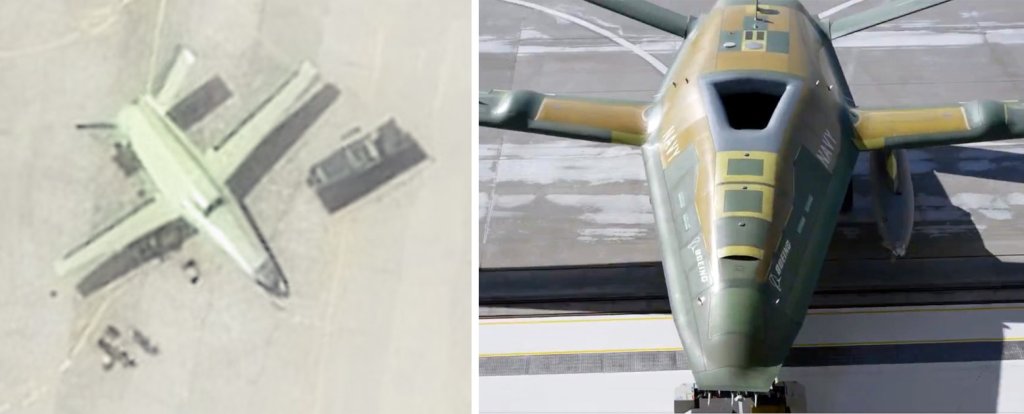
卫星图像显示,中国蒲城有一架外形异常的无人飞行器,其结构与波音公司的舰载MQ-25“黄貂鱼”无人机极为相似。虽然我们尚不清楚该无人机的功能,但该设施本身似乎也正成为中国不断发展的无人飞行器产业中日益重要的枢纽。
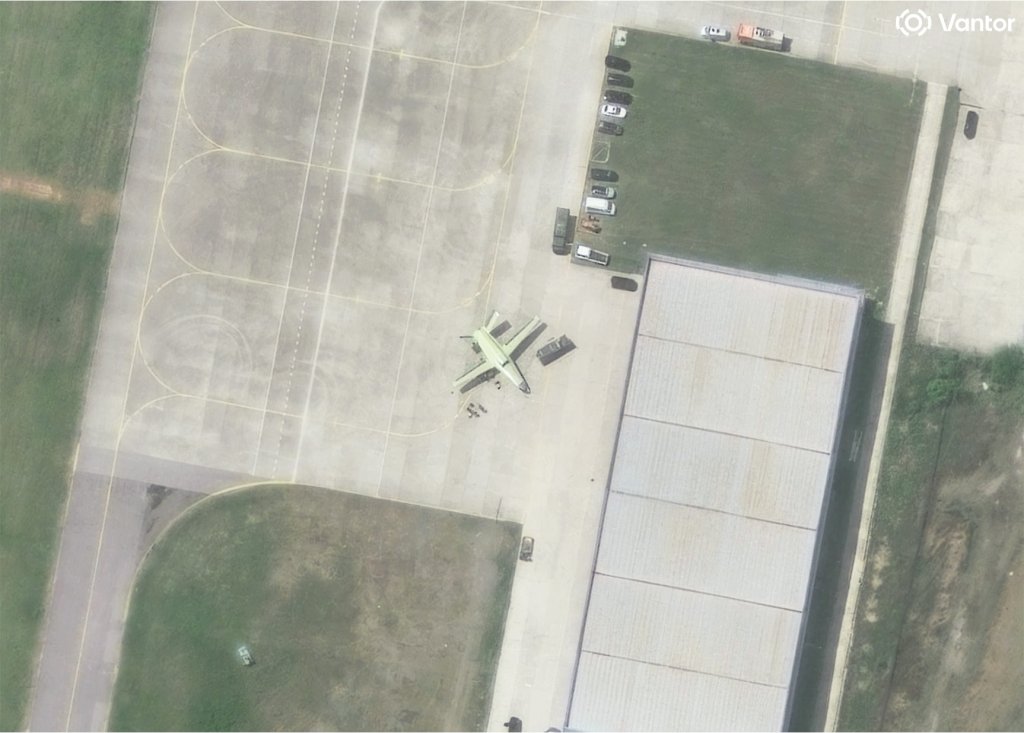
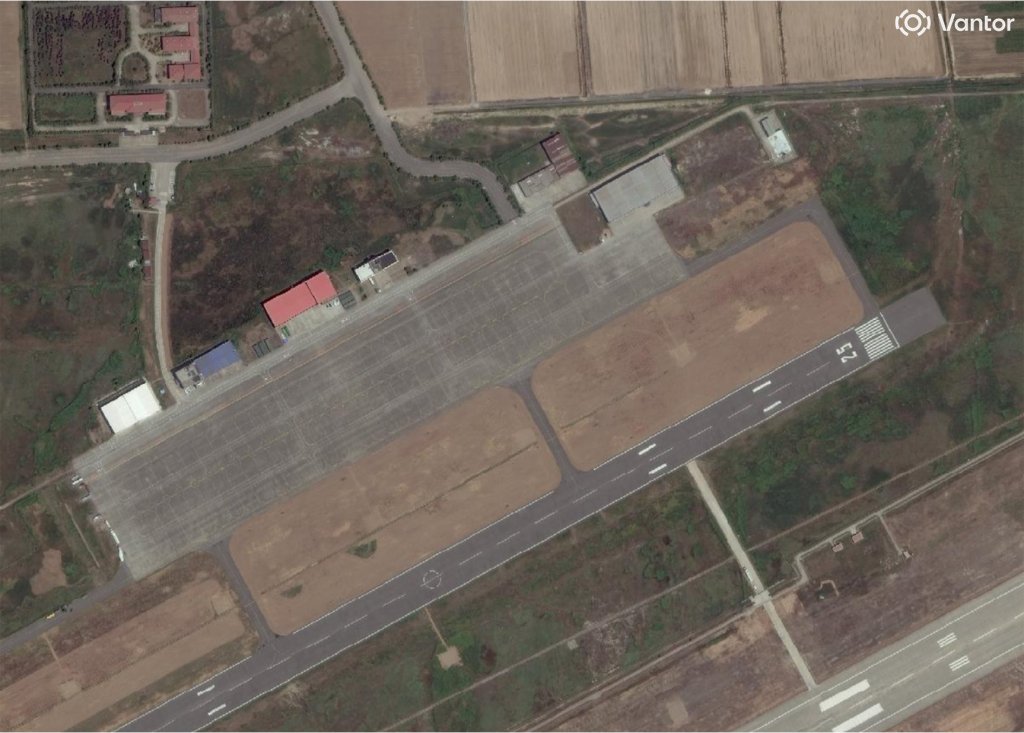
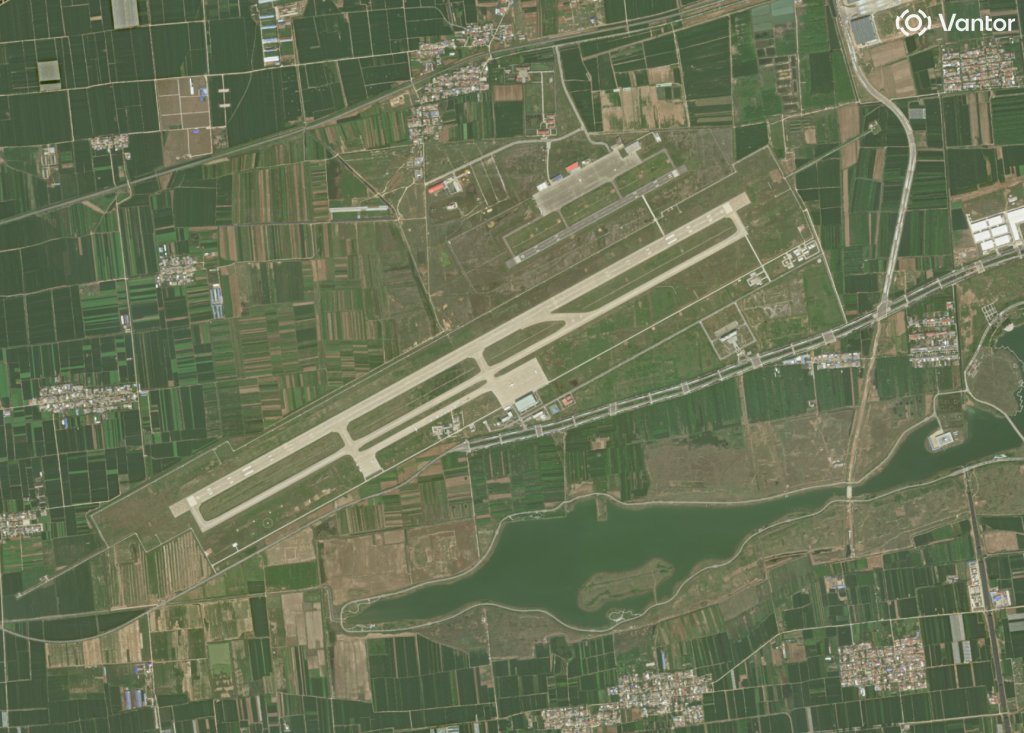
最初,这架无人机是在苹果地图上提供的中国西北部陕西省蒲城内富机场的卫星图像中被发现的,从而引起了人们的注意。另一张显示该无人机位于跑道上的图像则可通过必应地图查看。随后,TWZ从Vantor处获得了显示该无人飞行器的蒲城地区图像。
真是意外!在苹果地图上发现蒲城有三架无人机:CH-7、九天以及一架类似MQ-25的无人机。pic.twitter.com/rREqLuFAdU
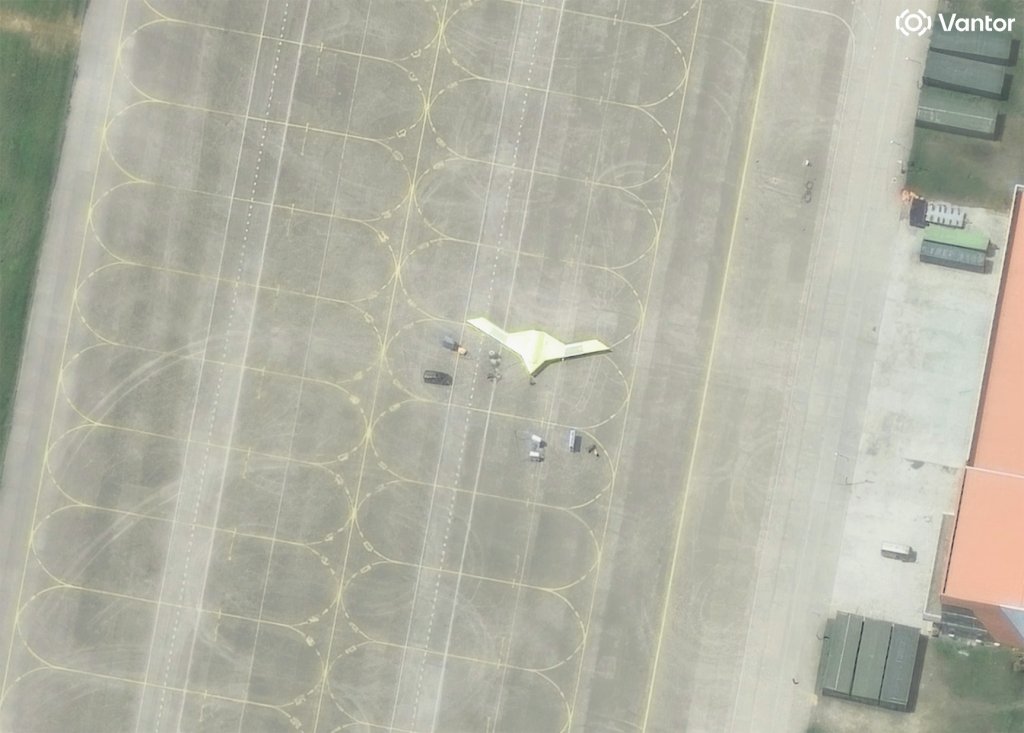
在必应地图上又发现了它!这次它还在跑道上。pic.twitter.com/xLgZetmOZf除了那架身份不明的飞机外,今年4月从蒲城拍摄的图像还显示了一架疑似CH-7隐形飞翼无人机,以及一种重型喷气动力九天母机无人机。
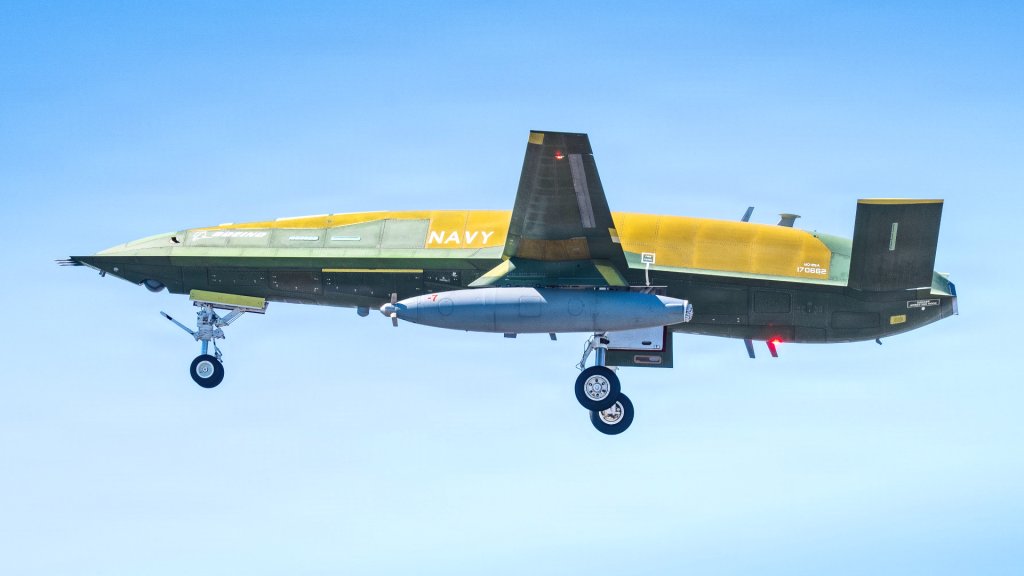
与那架身份不明的飞机最相似的当属波音公司的MQ-25“黄貂鱼”无人机。
MQ-25是一种舰载无人飞行器,主要用于为美国海军飞机提供空中加油服务,从而延长其航程并提升作战灵活性。它还为未来无人海军航空能力的发展奠定基础。
据Vantor公司称,那架中国身份不明的无人机翼展约为66英尺,长度为49英尺。而MQ-25的翼展约为75英尺,长度为51英尺。
这款中国无人机似乎属于类似的设计类别,但目前已有几处明显的差异。最显眼的特点之一就是机头部分。与MQ-25相比,后者的机头呈相对扁平的铲状,而中国这款飞机的机头则更为传统,呈逐渐变细的形状。机头上或许装有用于容纳雷达设备的圆锥形雷达罩。这一推测——当然只是推测——可以从机头与黄色底漆涂层的机身颜色不同这一现象得到支持。
进气口也有所不同。与MQ-25那种独特的、与机身平齐的进气口不同,中国这款飞机的进气口为更为传统的背部式设计,其边缘呈锯齿状,可能是为了降低雷达信号特征,或是为了将气流分为两个通道。另一种可能是该飞机配备了两台发动机,不过这一推测仍基于进气口呈分叉状的观察结果,尚无定论。
尾翼结构也可能具有独特性,类似MQ-25,采用横向展开的V形尾翼,但可能配备可见的控制面,而非全动式水平尾翼设计。综合来看,这些特点表明该飞机秉承了MQ-25的一些总体设计理念,但并非对其的直接复制。
长期关注中国航空航天领域发展并为TWZ撰稿的安德烈亚斯·鲁普雷希特认为,中国可能正在走与波音类似的研发路线,有望打造一种既能执行空中加油任务,又能承担情报、监视和侦察任务的舰载无人飞行器。
“我认为中国实际上正在走与波音相同的道路,其目标也是研发一种既能执行加油任务,又能承担其他情报、监视和侦察任务的飞行器,”鲁普雷希特对我们说道。
这种配备雷达且续航能力较强的飞行器,在不用于加油任务时,有望执行监视及其他基于传感器的任务。在浦城发展多用途无人加油机也符合中国进一步拓展无人飞行器在海军航空力量中作用的更广泛战略。其中最值得关注的进展是GJ-21,它是GJ-11“利剑”隐形无人作战飞行器(UCAV)的海军专用版本。该飞行器采用可折叠机翼,并具备弹射起飞和阻拦着陆功能,其低可观测性的飞翼设计旨在在中国日益增多的大型甲板战舰上运行,包括076型两栖攻击舰“四川”号。2026年10月,中国官方媒体报道称GJ-21已在该舰上成功完成首次起飞和着陆,这是舰载固定翼作战无人机发展过程中的一个重要里程碑。GJ-21项目的研发与中国新型配备弹射装置的福建航母的投入使用同步进行,该航母已开始部署J-35隐形战斗机、J-15T舰载战斗机和KJ-600空中预警机。这些发展共同表明,中国正致力于将无人飞行器整合到未来的航母航空队中,涉及的领域可能包括隐形攻击平台、监视系统以及其他专用支援飞机。那架身份不明的蒲城飞机可能代表这一更广泛计划中的另一类飞行器——或者完全是另一种东西。
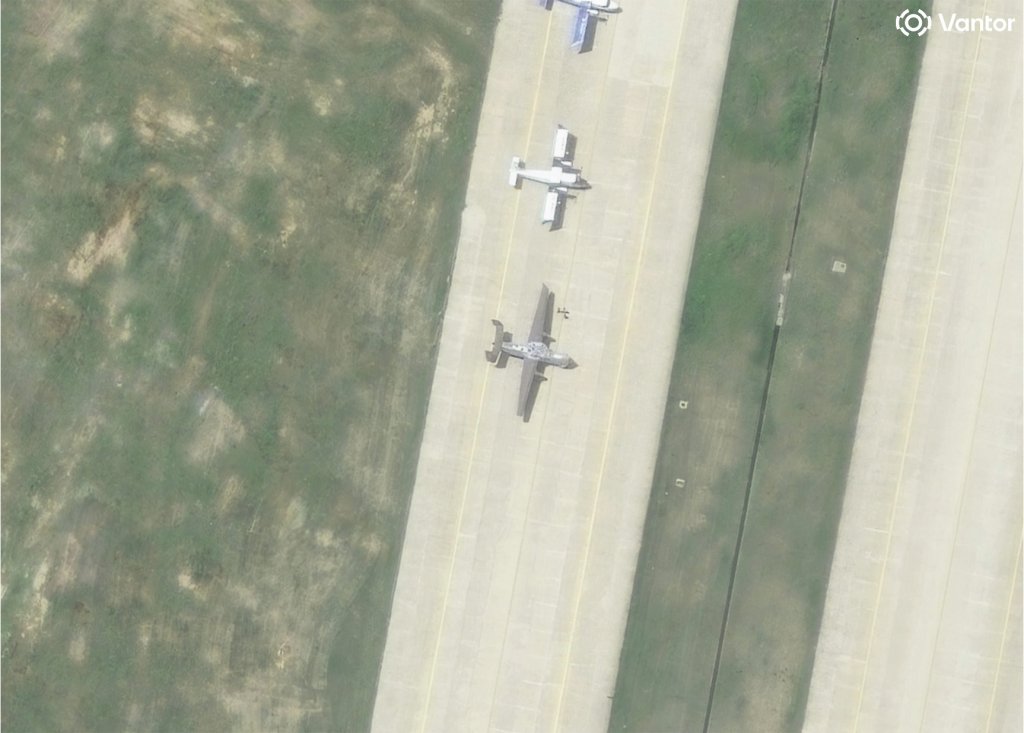
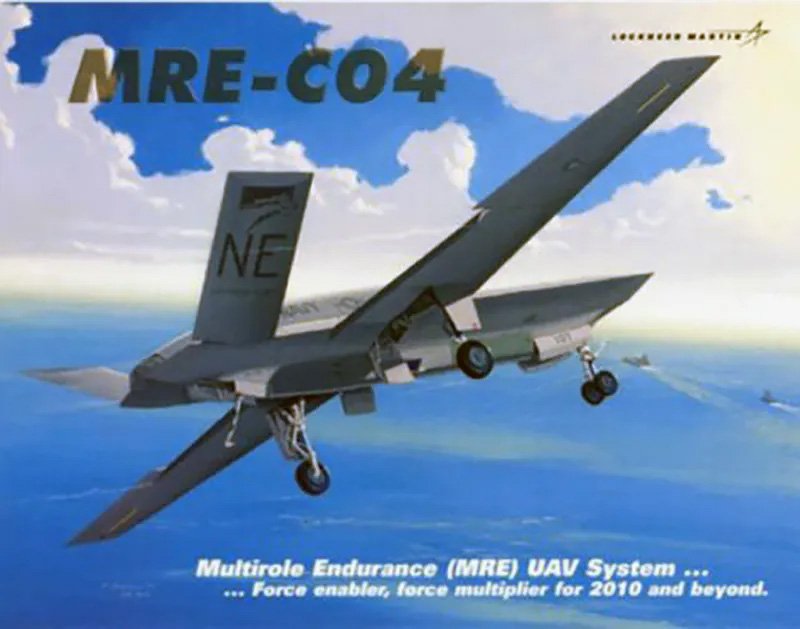
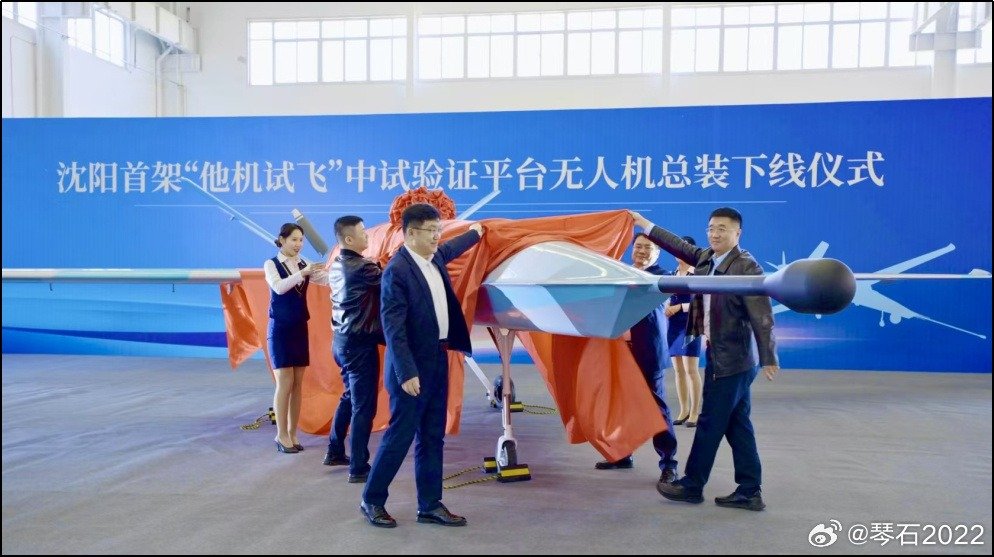
与此同时,该飞机的尺寸大约比MQ-25小20%,这意味着它的载油量也会更少。此外,波音公司的MQ-25源自一种具备低可观测性特征的无人作战飞行器设计,其之前的多用途无人作战飞行器概念也看起来非常相似。此外,诸如FQ-42“复仇者”这样的协同作战飞机以及XQ-67“外置感知站”在整体设计上也有相似之处。考虑到这一点,再结合其不同的机头结构,该无人机很可能会是一款真正的多用途无人作战飞机,甚至是用于保护高价值空中资产的协同作战飞机,而且它甚至可能不具备在航母上起降的能力。鲁普雷希特提醒称,这架神秘无人机的制造商仍未被确定。不过,关于该飞机可能来源的一个有趣线索来自沈阳飞机工业集团。鲁普雷希特提到了沈阳飞机工业集团在2025年展示的一款螺旋桨驱动的演示机,他认为这款机型可能与目前在蒲城展出的那款大型飞机的研发脉络相吻合。一种体积更小、由螺旋桨驱动的演示机,能够在研发更大型的飞行器之前,以相对较低的成本用于研究空气动力学特性、自主飞行控制、任务系统以及其他相关技术。
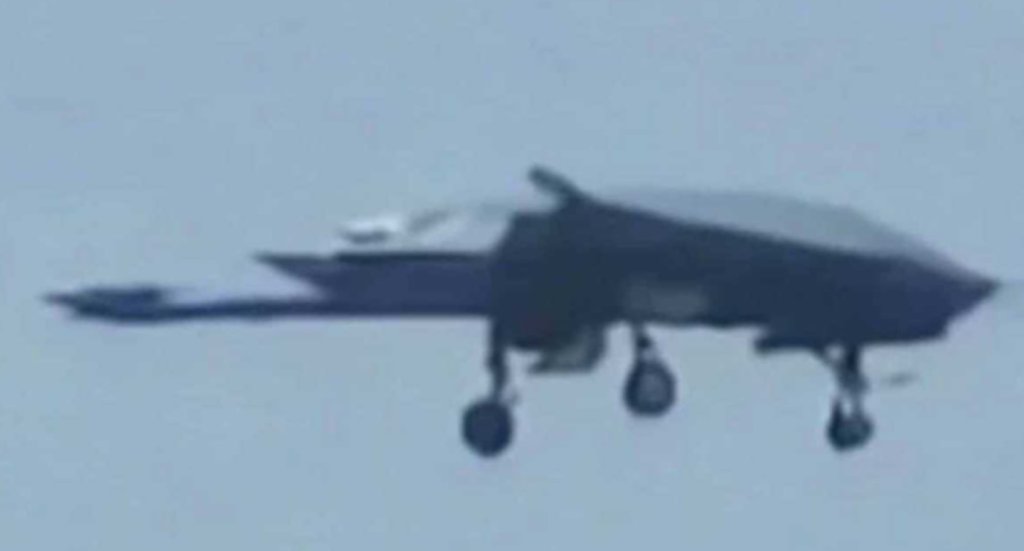
这架采用活塞发动机、螺旋桨驱动的飞机,其结构与MQ-25极为相似,也有视频显示它正在飞行。
突然想起中国有一家民营无人机公司,曾推出过一款MQ-25活塞桨叶版:https://t.co/Y69dfzpLNS pic.twitter.com/IzU08PC8DK
目前尚不清楚这架普诚公司的飞机是否与这款SAC演示机有关,还是属于完全独立的研发项目。除了外观相似之外,没有其他迹象表明二者存在关联,该飞机很可能只是用于测试的通用替代平台。在先进的无人机领域,这种配置也并非什么新颖事物。
考虑到该飞机被发现的地点,其外观也颇为引人注目。蒲城内夫机场位于陕西省,其周边的航空设施包括苹果地图中标注为“国家航空工业基地蒲城通用航空产业园关里班”的区域。该产业园拥有独立的较小跑道,与主机场的基础设施分开。据鲁普雷希特称,在过去一两年之前,这一地点对外界观察者来说相对不为人知。然而最近,多家飞机制造商似乎一直在那里进行测试。这表明蒲城可能不仅仅是一家制造商的飞行测试场所,而是多个从事无人飞行器研发与评估的机构所使用的设施。鲁普雷希特还提出,蒲城有可能是一家专门用于无人飞行器测试的设施,与中国西安的飞行测试中心——通常称为CFTE——有关联。“我目前还无法确定——这只是我的推测——这里是否实际上是西安CFTE的一个分支,后者负责载人飞行器,而这里则是无人飞行器的试验基地,”鲁普雷希特解释道。
如果蒲城确实成为多家制造商共用的试验场所,那或许可以解释为何会有几款原本并无关联的无人机设计出现在同一地点。
再回到那架神秘的无人机,其明显的尺寸、结构,以及可能与早期中国演示项目存在的关联,都使得它成为值得关注的进展。
无论如何,目前蒲城传回的影像为人们展现了中国一个可能具有重要意义的新无人飞行器项目的一角。
联系作者:[email protected]
原文
Satellite imagery has revealed an unusual uncrewed aircraft at Pucheng, China, with a configuration that bears very strong similarities to Boeing’s carrier-based MQ-25 Stingray. While we still have no idea about the function of the drone, the facility itself also appears to be an increasingly important hub for China’s expanding uncrewed aircraft industry.
The drone initially attracted attention after being spotted in a satellite image of Pucheng Neifu Airport in Shaanxi Province, in northwestern China, available through Apple Maps. A separate image of the drone, where it appears on a runway, is also available through Bing Maps. TWZ subsequently obtained imagery of Pucheng from Vantor showing the uncrewed aircraft in question.
what a suprise! Three UAV spotted at Pucheng on apple maps. CH-7, Jiutian and a MQ-25 like UAV. pic.twitter.com/rREqLuFAdU
spotted again on bing maps! and it's on the runway this time pic.twitter.com/xLgZetmOZf
As well as the unidentified aircraft, imagery from Pucheng dating from April of this year also reveals what appears to be a CH-7 stealthy flying-wing drone and an example of the heavyweight jet-powered Jiutian mothership drone.
The most obvious comparison for the unidentified aircraft is Boeing’s MQ-25 Stingray.
The MQ-25 is a carrier-based uncrewed aircraft developed primarily to provide aerial refueling for U.S. Navy aircraft, extending the range and operational flexibility of carrier air wings. It also provides a foundation for future uncrewed naval aviation capabilities.
In terms of dimensions, the unidentified Chinese UAV has a wingspan of approximately 66 feet and a length of 49 feet, according to Vantor. In contrast, the MQ-25 measures approximately 75 feet in wingspan and 51 feet in length.
The Chinese drone appears to occupy a similar general design category, but there are several important differences notable at this stage.
One of the most noticeable is the forward fuselage. Unlike the MQ-25, whose forward section has a relatively flattened, shovel-like appearance, the Chinese aircraft appears to have a more conventional, tapered nose. Perhaps this could incorporate a conical radome housing radar equipment. That theory, and it is just a theory, could be supported by the different color of the nose compared to the yellow primer-painted airframe.
The air intake is also different. Rather than the exotic, flush inlet associated with the MQ-25, the Chinese design has a more conventional dorsal intake that appears serrated to help with radar signature and/or split into two channels. Another possibility is that the aircraft has two engines, although that remains speculative, based on the apparent bifurcated intake.
The tail configuration may also be distinctive, with a laterally flared V-tail, like the MQ-25, but possibly incorporating visible control surfaces instead of an all-moving tailplane design.
Taken together, these features suggest an aircraft that shares some of the MQ-25’s general design philosophy but is not an attempt at a direct clone.
Long-time Chinese aerospace observer and TWZ contributor Andreas Rupprecht, who has been following developments surrounding the aircraft, believes China could be following a development path similar to Boeing’s, potentially producing a carrier-based uncrewed aerial refueling platform that can also undertake intelligence, surveillance, and reconnaissance (ISR) missions.
“I think China is actually following the same path as Boeing here, and it’s heading towards a tanker that can also take on other roles as an ISR platform,” Rupprecht told us.
A radar-equipped aircraft with substantial endurance could potentially perform surveillance and other sensor-related missions when not being used as a tanker.
The potential development of a multirole uncrewed tanker at Pucheng would also fit into a much broader push by China to expand the role of uncrewed aircraft in its naval aviation forces.
One of the most notable developments is the GJ-21, a navalized derivative of the GJ-11 Sharp Sword stealth uncrewed combat air vehicle (UCAV). Featuring folding wings and provisions for catapult launches and arrested recoveries, the low-observable flying-wing design is intended to operate from China’s growing fleet of large-deck warships, including the Type 076 amphibious assault ship Sichuan. In October 2026, Chinese state media reported that the GJ-21 had successfully completed its first takeoff and landing aboard the vessel, a significant milestone in the development of shipborne fixed-wing combat drones.
The GJ-21 effort is taking place alongside the introduction of China’s new catapult-equipped Fujian aircraft carrier, which has begun operating the J-35 stealth fighter, J-15T carrier-based fighter, and KJ-600 airborne early warning aircraft. Taken together, these developments point to an increasingly ambitious effort to integrate uncrewed aircraft into China’s future carrier air wings, potentially spanning stealthy strike platforms, surveillance systems, and other specialized support aircraft. The unidentified Pucheng aircraft could represent another, quite different part of that wider effort — or something else altogether.
At the same time, this aircraft is roughly 20 percent dimensionally smaller than the MQ-25, which would mean it would have less fuel to give. It’s also worth noting that Boeing’s MQ-25 emerged from an unmanned combat air vehicle (UCAV) design that included low-observable features. Multirole UCAV concepts predating it also looked very similar.
In addition, Collaborative Combat Aircraft (CCA), for instance, the FQ-42 Vengeance, and also the XQ-67 Off-Board Sensing Station share a similar overall design.
With this in mind, and remembering its different nose section, this could just as easily be a true multirole UCAV or even a CCA, such as one designed for force protection of high-value aerial assets, and it may not even be carrier-capable.
Rupprecht cautioned that the manufacturer of the mystery drone remains unidentified. However, one of the more interesting clues about the aircraft’s possible origins comes from Shenyang Aircraft Corporation (SAC).
Rupprecht pointed to a propeller-driven demonstrator unveiled by SAC in 2025, which he believes could fit the development lineage of the larger aircraft now visible at Pucheng.
A smaller, propeller-driven demonstrator could provide a relatively inexpensive way to investigate aerodynamic characteristics, autonomous flight controls, mission systems, and other technologies before progressing to a much larger aircraft.
This piston-powered, propeller-driven aircraft with a broadly similar configuration to the MQ-25 was seen in a video flying, as well.
突然想起中国一家民营无人机公司,做过一款MQ-25活塞桨叶版 https://t.co/Y69dfzpLNS pic.twitter.com/IzU08PC8DK
Whether the Pucheng aircraft is related to this SAC demonstrator or if it’s an entirely separate program remains unknown. Beyond the external resemblance, there are no indications that they are linked, and the aircraft could just be a general test surrogate platform. The configuration isn’t totally novel in the advanced UAS world.
The aircraft’s appearance is also interesting given the location where it has been spotted.
Pucheng Neifu Airport is located in Shaanxi Province, and its surrounding aviation facilities include an area identified in Apple Maps as the National Aeronautics Industrial Base Pucheng General Aviation Industrial Park Guanliban.
The industrial park has its own smaller runway, separate from the main airport infrastructure.
The site had remained relatively obscure to outside observers until roughly the past one to two years, according to Rupprecht. More recently, however, various aircraft manufacturers have apparently been conducting testing there.
This raises the possibility that Pucheng is not simply an individual manufacturer’s flight-test location, but a facility used by multiple organizations developing and evaluating uncrewed aircraft.
Rupprecht also raised the possibility that Pucheng could potentially be a specialized uncrewed aircraft testing facility associated with China’s Flight Test Establishment at Xi’an, commonly known as CFTE.
“I cannot say (yet) whether this — and this is my theory — is effectively a branch of the CFTE at Xi’an, which is for crewed and this is a base for uncrewed ones,” Rupprecht explained.
If Pucheng does serve as a shared testing location for multiple manufacturers, it could help explain the appearance of several otherwise unrelated UAV designs at the same site.
Returning to the mystery drone, the combination of its apparent size, configuration, and possible connection to earlier Chinese demonstrator programs makes it an interesting development to watch.
Regardless, for now, the imagery from Pucheng offers a glimpse of a potentially significant new Chinese uncrewed aircraft program.
Contact the author: [email protected]