科技
谷歌推出Agent Compute Engine,用于安全地执行AI智能体
中文译文
谷歌近日推出了Agent Compute Engine,这是一种托管服务,可在隔离的微虚拟机中运行人工智能代理,并具备检查点功能,可用于暂停和恢复执行环境。该设计将凭证、API密钥以及OAuth刷新令牌置于代理沙箱之外,通过外部Agent Gateway来验证请求并注入所需的机密信息。
谷歌设计Agent Compute Engine是为了满足全球范围内的三项需求:即便代理出现错误,也要确保沙箱中不存在可被利用的凭证;尽量降低闲置代理恢复时的成本与延迟;以及在不同会话和操作系统更新之间保持工作空间的持续性。基础设施团队表示:
Agent Compute Engine通过使用写时复制内存共享技术,在单个操作系统模板上运行多个代理,并通过快速的检查点与恢复功能来暂停闲置的微虚拟机,从而实现上述目标。在深度分析文章《Agent Compute Engine内部探秘》中,谷歌的资深工程师Ramanathan Venkatapathy和Rohit Jnagal介绍了该服务的架构,涵盖了微虚拟机隔离、凭证管理、代理身份识别、存储以及大规模调度等功能。他们阐述了代理控制组件与沙箱之间的严格分离机制:
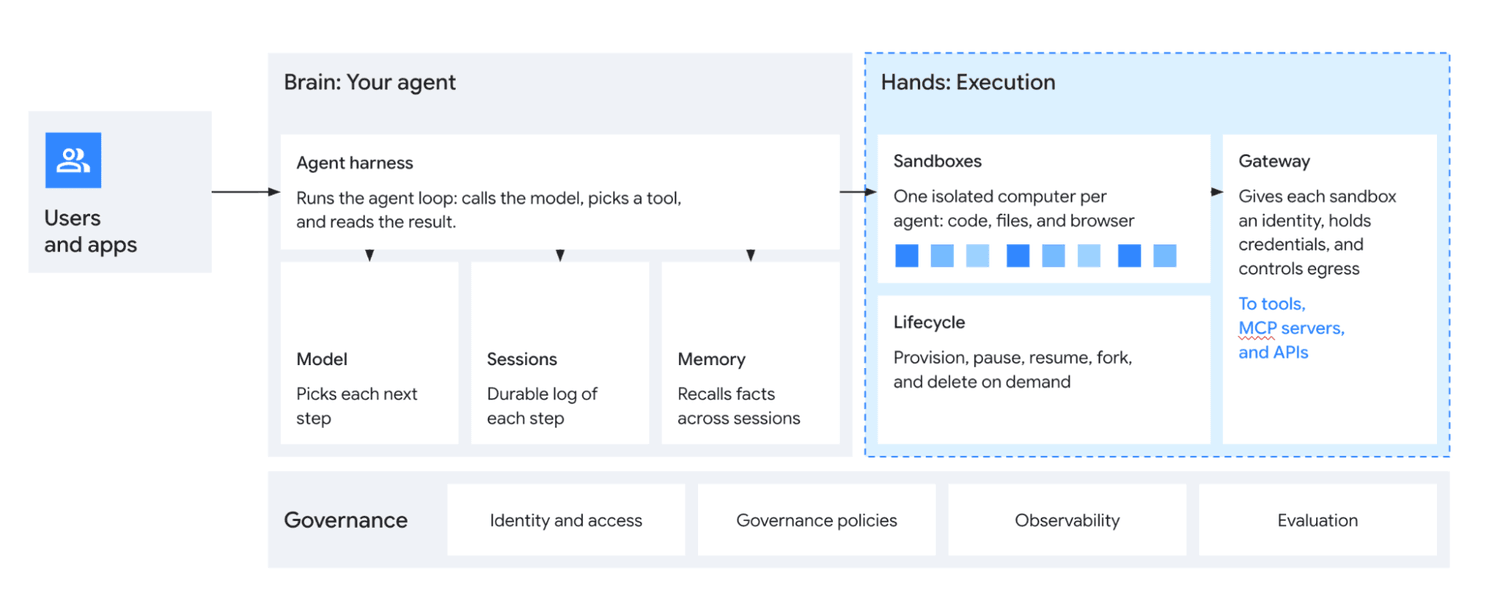
调度控制组件(相当于“大脑”)完全在执行沙箱(相当于“双手”)之外运行,从而确保不可信的客机环境仅能执行由控制组件发送的明确指令,并将执行结果反馈回来。这种分离机制能够形成可追溯的审计记录,将每个由控制组件发起的工具调用与沙箱内的预期计算活动相对应。
来源:谷歌博客该架构支持四类主要工作负载:能够执行代码、浏览网页并执行操作的交互式客户端和企业级代理;用于自主软件工程的持久化Linux工作空间;用于模型评估和强化学习的大规模并行环境;以及用于Google服务中动态逻辑的轻量级沙箱执行环境。
Venkatapathy和Jnagal还介绍了云服务提供商如何将该平台用于Gemini、Gemini for Business、代理开发平台Antigravity以及模型评估工作负载等内部用途。
此外,Google还提供了Agent Substrate,这是一种开源的、基于Kubernetes的运行时环境,可用于在隔离环境中运行AI代理。Agent Substrate能够独立于底层计算基础设施来管理沙箱的生命周期,从而使空闲的代理可以暂停运行并保留其状态,需要在时则可在可用的计算资源上恢复执行。在文章《谷歌的Agent Compute Engine:一种无需凭证的微虚拟机沙箱,以及谷歌尚未推出的功能》中,Elementor的AI专家Harel Asaf分析了该技术的安全架构、凭证与代理执行环境之间的分离机制,以及谷歌宣布的功能与当前实际可用功能之间的差距。Asaf警告称:
该文章并未提供Agent Compute Engine本身的启动时间、价格或密度数据。文中提到,开发者将能够控制每个环境的镜像、身份、网络访问权限及生命周期,而谷歌则负责管理这些代理实例,该服务预计将在未来几个月内推出预览版本。公告中所提及的数值则属于Agent Substrate相关内容。谷歌并非唯一提供用于AI智能体的托管式、隔离式执行环境的供应商,AWS和Azure也通过Bedrock AgentCore和Foundry Agent Service提供了类似功能。不过,谷歌的做法是将凭证置于智能体沙箱之外,通过外部网关来注入这些凭证。
谷歌还通过集中式的身份管理和策略执行功能提升了其对智能体的管控能力:该管控体系包括用于流量控制和策略执行的Agent Gateway、用于追踪已获批智能体及工具的Agent Registry、用于身份验证和审计的基于SPIFFE的Agent Identity,以及用于监控模型调用和工具调用的兼容OpenTelemetry的监控功能。
Agent Compute Engine目前尚未推出,其定价也尚未公布。该云服务提供商计划在未来几个月内提供预览版本。虽然Agent Substrate可在各种Kubernetes环境中使用,但Agent Compute Engine本身仅限于在Google Cloud上运行。
原文
Google recently announced Agent Compute Engine, a managed service that runs AI agents in isolated microVMs, with checkpointing capabilities to suspend and resume execution environments. The design keeps credentials, API keys, and OAuth refresh tokens outside the agent sandbox, using an external Agent Gateway to authenticate requests and inject the required secrets.
Google designed Agent Compute Engine to address three requirements at global scale: keeping sandboxes free of exploitable credentials, even when agents make mistakes; minimizing the cost and latency of resuming idle agents; and preserving persistent workspaces across sessions and operating system updates. The infrastructure team writes:
Agent Compute Engine achieves this by using copy-on-write memory sharing to run multiple agents on a single operating system template, and pausing idle microVMs via fast checkpoint and restore.
In the deep dive "Inside Agent Compute Engine," Ramanathan Venkatapathy and Rohit Jnagal, distinguished engineers at Google, describe the service’s architecture, covering microVM isolation, credential management, agent identity, storage, and scheduling at scale. They explain the strict separation between the agent harness and sandbox:
The orchestration harness (the brain) runs completely outside the execution sandbox (the hands), helping ensure that untrusted guest environments only execute explicit commands dispatched by the harness and stream output back. This boundary establishes a deterministic audit trail correlating every harness-initiated tool call with expected compute activity inside the sandbox.
Source: Google blog
The architecture supports four main workload categories: interactive consumer and enterprise agents that execute code, browse the web, and perform actions; persistent Linux workspaces for autonomous software engineering; large-scale parallel environments for model evaluation and reinforcement learning; and lightweight, sandboxed execution environments for dynamic logic in Google services.
Venkatapathy and Jnagal also describe how the cloud provider uses the platform internally for Gemini, Gemini for Business, the agentic development platform Antigravity, and model evaluation workloads.
Separately, Google offers Agent Substrate, an open-source, Kubernetes-native runtime for running AI agents in isolated environments. Agent Substrate manages sandbox lifecycles independently of the underlying compute infrastructure, allowing idle agents to be suspended while preserving their state and resuming execution on available workers when needed.
In the article "Google's Agent Compute Engine: A MicroVM Sandbox With No Credentials Inside, and What Google Has Not Shipped Yet," Harel Asaf, AI specialist at Elementor, examines the security architecture, the separation of credentials from agent execution environments, and the gaps between Google's announcement and what is currently available. Asaf warns:
The deep dive gives no boot time, price or density figure for Agent Compute Engine itself. It says developers will control each environment's image, identity, network access and lifecycle, while Google manages the fleet, and that the service is targeted for preview in the coming months. The numbers in the announcement belong to Agent Substrate.
Google is not the only provider offering managed, isolated execution environments for AI agents, with AWS and Azure providing similar capabilities through Bedrock AgentCore and Foundry Agent Service. However, Google’s approach keeps credentials outside agent sandboxes and injects them through an external gateway.
Google also expanded its agent governance capabilities with centralized identity and policy enforcement: the governance stack includes Agent Gateway for traffic control and policy enforcement, Agent Registry for tracking approved agents and tools, SPIFFE-based Agent Identity for authentication and auditing, and OpenTelemetry-compatible observability for monitoring model calls and tool invocations.
Agent Compute Engine is not yet available, and pricing has not been announced. The cloud provider is targeting a preview in the coming months. While Agent Substrate is portable across Kubernetes environments, Agent Compute Engine itself is limited to Google Cloud.