国际政治
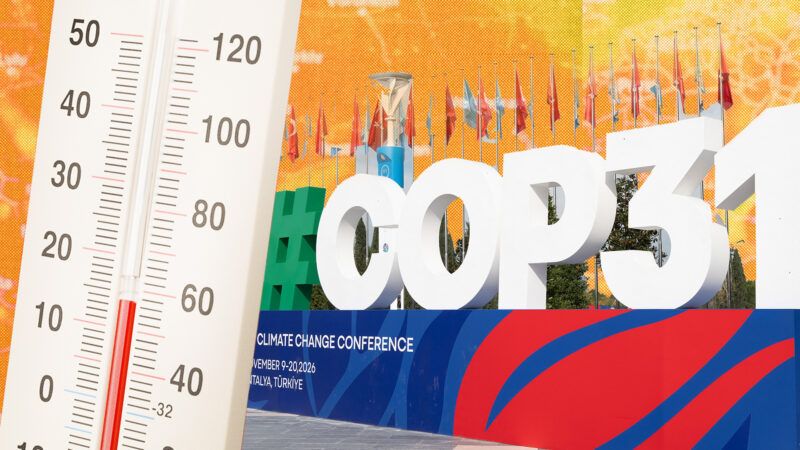
土耳其气候变化会议被称为“有史以来最糟糕的COP”
中文译文
“我可以毫不怀疑地告诉你,这是有史以来最糟糕的COP会议,”来自Power Shift Africa的长期气候活动家穆罕默德·阿多在DW新闻中说道。考虑到联合国每年圣诞前举办的这类气候会议的糟糕表现与低效结果,阿多对于正在土耳其安塔利亚走向惯常的无效结局的《联合国气候变化框架公约》第31次缔约方大会(COP31)的判断很可能是正确的。
COP31很可能会在本周末以惯常的会议决议告终,这些决议中充斥着对各国政府的含糊劝告,要求其加强应对气候变化的行动并增加气候融资。所谓加强行动,意味着大幅削减温室气体排放,尤其是燃烧石油、天然气和煤炭所产生的二氧化碳。具体要削减多少?目标是到2030年减少18%,2035年减少45%,2040年减少69%。后者包括这样的要求:富裕国家应在2035年前每年向贫穷国家提供至少3050亿美元的资金,表面上是为了帮助这些国家适应气候变化。
尽管已经召开了31届联合国气候变化大会,温室气体排放量及大气中的浓度仍在上升,全球平均气温也在持续升高。
《联合国气候变化框架公约》于1992年通过,旨在控制导致全球变暖的温室气体排放,但实际上这些排放量仍在持续增加。
排放量的上升进而导致大气中导致全球变暖的二氧化碳浓度上升。
2015年《巴黎气候变化协定》的目标是将“全球平均气温上升幅度控制在工业化前水平以上2℃以内”,并努力“将气温上升幅度限制在工业化前水平以上1.5℃以内”。为实现这一目标,温室气体排放量应在2025年前达到峰值,到2030年减少43%。显然,这一目标并未实现。随着大气中温室气体浓度的上升,全球平均气温也在不断升高。事实上,2024年成为有仪器记录以来最热的一年,这已经突破了《巴黎协定》设定的1.5摄氏度这一基准。独立开源气候数据机构伯克利地球在最新报告中指出:“2026年10月是有记录以来最热的10月,全球平均气温比1850年至1900年的平均气温高出1.80 ± 0.12摄氏度(3.25 ± 0.22华氏度),比2023年10月创下的此前纪录高出约0.12摄氏度。”伯克利地球还发现,“现在几乎可以肯定,2026年的年平均气温将比1850年至1900年的平均气温高出1.5摄氏度(2.7华氏度),其具体数值可能在1.55至1.64摄氏度之间。”这一数值将超过2024年的纪录,使2026年成为伯克利地球记录中有史以来最热的一年。欧洲哥白尼气候变化服务组织也预测,2026年的全球平均气温将比工业化前水平高出1.5摄氏度以上。
今年,由于超级厄尔尼诺现象的影响,全球气温持续上升。这种现象表现为极暖的水流周期性涌入南美洲沿岸的东太平洋,向大气中释放大量热量。
联合国现在承认,“将全球变暖控制在工业化前水平以上1.5摄氏度的机会已经消失”。据《商业绿色》报道,COP31谈判主席克里斯·鲍文表示:“COP31有责任成为首个承认世界无法实现11年前巴黎协定所设定的将全球变暖控制在1.5摄氏度以内的目标的会议。”鉴于联合国气候变化谈判的无效性,全球平均气温的走势可能如何?联合国认为,到本世纪末,气温可能比工业化前水平上升2.6摄氏度至2.8摄氏度。正如我去年所报道的,气候研究专家罗杰·皮尔克及其同事在2022年采用了更为合理的排放情景进行预测,认为到2100年全球平均气温将比工业化前基准期(1850–1900年)上升“2摄氏度至3摄氏度之间,中值为2.2摄氏度”。
皮尔克正确地指出:“尽管近年来对未来气候变化的预测已经有所缓和,但人类对气候的影响依然存在,且对我们的共同未来构成威胁。”经过31届缔约方大会的讨论,联合国气候变化谈判仍未在减轻这些风险方面取得显著成效。
原文
"I can tell you without any doubt that this has been the worst COP ever," says longtime climate activist Mohamed Adow from Power Shift Africa in DW News. Considering the sorry, ineffectual history of the United Nations' annual pre-Christmas climate carnivals, Adow is probably right about the 31st Conference of the Parties (COP31) to the United Nations Framework Convention on Climate Change (UNFCCC) currently limping toward the customary ineffectual close in Antalya, Turkey.
COP31 will most likely conclude this weekend with the usual conference decision filled with vague admonitions to governments urging them to enhance climate change action and increase climate finance. The former means drastically cutting back on their greenhouse gas emissions, largely carbon dioxide emitted from burning oil, gas, and coal. How drastic? Aggressive cuts by 18 percent by 2030, 45 percent by 2035, and 69 percent by 2040. The latter consists of demands that rich countries funnel through 2035 at least $305 billion annually to poor countries, ostensibly to help them adapt to climate change.
Despite 31 U.N. climate change conferences, greenhouse gas emissions and atmospheric concentrations continue to rise, as do global average temperatures.
The UNFCCC was adopted in 1992 with the aim of reining in globe-warming greenhouse gas emissions; they have instead continued their steady increase.
Rising emissions have consequently increased the concentration of globe-warming carbon dioxide in the atmosphere.
The 2015 Paris Agreement on Climate Change's aim was to hold "the increase in the global average temperature to well below 2°C above pre-industrial levels" and pursue efforts "to limit the temperature increase to 1.5°C above pre-industrial levels." To achieve this goal, greenhouse gas emissions were supposed to peak before 2025 and decline by 43 percent by 2030. That obviously didn't happen.
Concomitant with rising atmospheric greenhouse gas concentrations, the average global temperature has been increasing.
In fact, the Paris Agreement's 1.5 degrees Celsius benchmark was breached when 2024 became the hottest year in the instrumental record. In its latest update, the independent open-source climate data group Berkeley Earth reports that "October 2026 was the warmest October on record, with a global average of 1.80 ± 0.12 °C (3.25 ± 0.22 °F) above the 1850–1900 average, about 0.12 °C above the previous record set in October 2023." Berkeley Earth also finds that it is "now virtually certain that the 2026 annual average will exceed 1.5 °C (2.7 °F) above the 1850–1900 average, with a likely annual range of roughly 1.55–1.64 °C." This level would exceed the previous record in 2024, making 2026 the warmest year in Berkeley Earth's record.
The European Copernicus Climate Change Service also projects that global average temperature in 2026 will exceed 1.5 C above the preindustrial level.
Global temperatures have been boosted this year by the super El Niño phenomenon in which very warm water sloshing periodically over into the eastern Pacific Ocean off the coast of South America releases massive amounts of heat into the atmosphere.
The United Nations now acknowledges that the "chance of holding global warming to 1.5°C above pre-industrial levels…is now gone." BusinessGreen reports that COP31 President of Negotiations Chris Bowen said that "it falls to COP31 to be the first COP to acknowledge the world will not meet the covenant laid out in Paris 11 years ago to hold the world to 1.5C of warming".
Given the futility of U.N. climate change negotiations, what is the likely trend in global average temperatures? The U.N. suggests that warming could rise by as much as 2.6 C to 2.8 C above the preindustrial level by the end of this century. As I reported last year, climate researcher Roger Pielke Jr. and his colleagues, using more plausible emissions scenarios, projected in 2022 that global average temperatures would rise above the preindustrial baseline (1850–1900) to "between 2 °C and 3 °C of warming by 2100, with a median of 2.2 °C."
"Even though projections of future climate change have moderated considerably in recent years," correctly observed Pielke, "the human influence on climate remains real and poses risks to our collective future." After 31 years of COPs, U.N. climate change negotiations have still not done much to ameliorate those risks.