国际政治
特朗普、习近平与普京历史性峰会带来的三点启示
中文译文
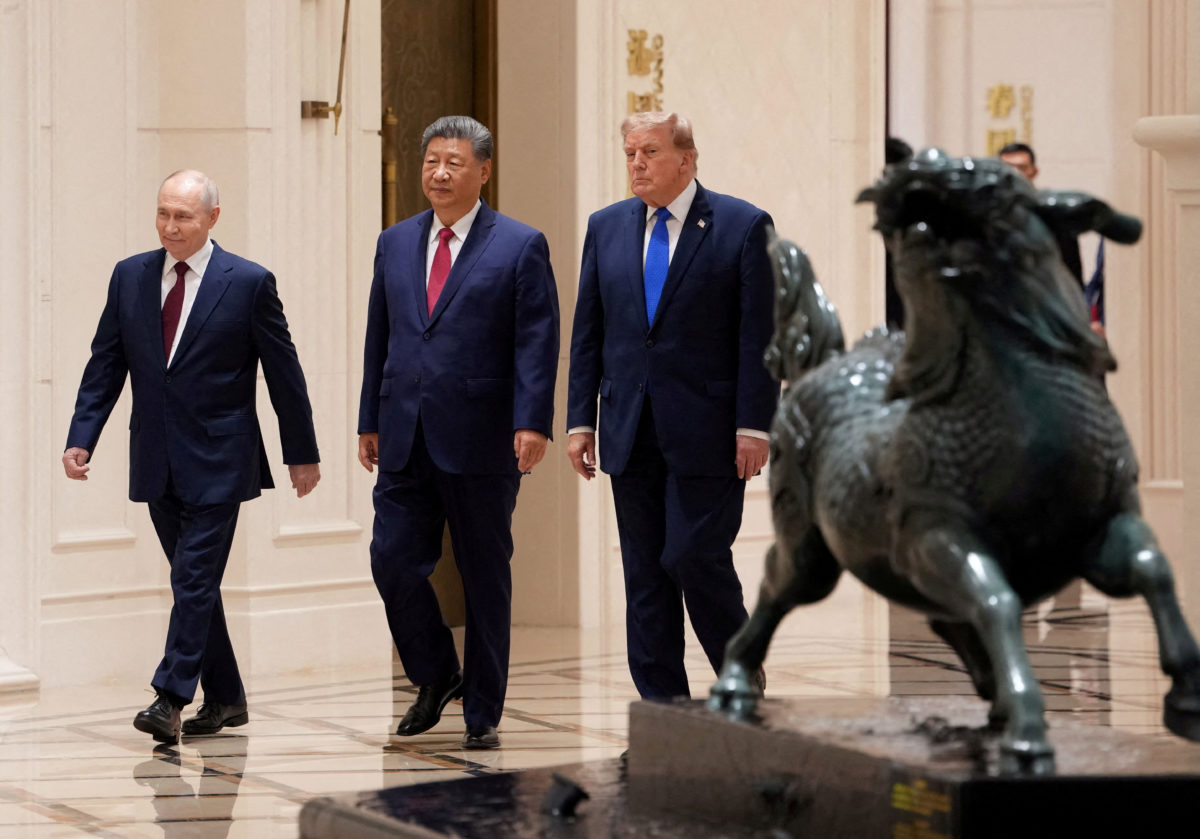
中国深圳(美联社)——美国总统唐纳德·特朗普、中国国家主席习近平与俄罗斯总统弗拉基米尔·普京于周四举行了会晤,这是三国领导人首次坐下来进行对话。
他们首先谈到作为第二次世界大战的胜利国以及全球大国,有责任共同维护和平。但三国在会后发布的声明更多体现的是象征意义而非实质内容。
阅读更多:特朗普、习近平与普京就核风险问题举行的三方会谈未取得突破
会晤后发布的“和平宣言”未提及俄罗斯在乌克兰的战争或美国主导的伊朗战争。宣言称,三国领导人同意需要对联合国进行改革、增加石油供应以及降低核风险。但声明并未具体说明领导人所同意的联合国改革类型和范围。报道称,三国还同意国家官员应享有免于起诉的特权,以反对国际刑事法院所谓的“管辖权滥用”。
以下是这场持续了一个多小时的会谈的要点。
中国国家主席习近平主持了这场21世纪大国峰会。
据中国官方新闻机构新华社报道,仅通过主办此次峰会,习近平就进一步提升了中国日益重要的外交地位。他称与特朗普和普京的会谈是积极且富有成果的,三国在维护世界和平问题上观点一致。新华社还报道称,三国同意大国应认真对待所有国家的正当安全关切,并认为分歧应通过谈判与合作来解决。有报道称,习近平表示:“只要对话不断,大门始终敞开,和平就有希望。今天这次三方会议所播下的种子必将生根、发芽、开花并结出果实。”
在领导人们那份措辞宽泛的协议中,并未提及中国声称自己有权通过武力等方式收复民主治理的台湾岛这一问题。中国将此视为内政。
伦敦托尼·布莱尔全球变化研究所的高级政策顾问鲁比·奥斯曼表示,中国希望将自己定位为一种不同于美国和俄罗斯的超级大国——一种不卷入战争并倡导保护小国的国家。
她说,北京的优先事项是避免会议涉及具体细节。“北京希望被视为会议中的理智一方。”
特朗普宣称自己将在历史上留下印记。特朗普称这些领导人的聚会“正在真正创造历史”,并向习近平和普京表示,他们通过摒弃传统对手间的互动方式,正在打破现状。
白宫对此次会谈的预期并不高。但特朗普在周四称这只是开始——一个开启对话、解决一些世界最棘手问题的契机。
在与习近平举行三方会晤之前的一次一对一会谈中,特朗普对普京说:“很多美好的事情可能会由此产生,或者至少就此开始。”
这场精心策划的活动为特朗普带来了喘息之机,此前他的总统任期经历了几周糟糕的状况:共和党在中期选举中惨败,大规模技术故障令美国人忧心忡忡,伊朗还加剧了对美国盟友的攻击。特朗普表示,伊朗问题以及俄罗斯对乌克兰的战争都在讨论议程之上。中国和俄罗斯对德黑兰有着巨大影响力,同时也被美国指责支持伊朗伊斯兰共和国。
他周四重申,他与习近平都认为伊朗需要完全重新开放霍尔木兹海峡——这条对全球能源供应至关重要的水道自战争爆发以来已成为关键通道。他们还一致认为伊朗不能获得核武器,特朗普说道。
但没有任何迹象表明特朗普从习近平或普京那里获得了任何解决伊朗冲突的协议。
会谈结束后,特朗普参与了在柏林举行的一次会议,与会者包括美国特使贾里德·库什纳和史蒂夫·维特科夫、乌克兰总统沃洛迪米尔·泽连斯基,以及40多位支持乌克兰作战的欧洲领导人。
维特科夫称,特朗普在柏林会议上表示,他曾与习近平和普京探讨过如何为乌克兰战争找到和平结局。
普京与特朗普、习近平同台亮相对普京而言,APEC峰会期间的三方会谈,以及他此前与两位领导人的单独会晤,为这位克里姆林宫领导人提供了难得的机会,让他能够表明自己领导的俄罗斯是一个可与美国和中国相抗衡的超级大国。特朗普和普京在反对国际刑事法院这一问题上找到了共同点。由于涉嫌在乌克兰犯下战争罪行,这位俄罗斯领导人被国际刑事法院发出逮捕令通缉;而美国则反对国际刑事法院对以色列前总理本雅明·内塔尼亚胡发出逮捕令。阅读更多:对普京而言,与特朗普和习近平同台亮相提升了他在国际舞台上的地位。普京上次参加APEC峰会是在2017年。他作为贵宾出席此次峰会,再加上俄罗斯作为全球强国之一的地位——至少在深圳举行的这次峰会上——都标志着一场外交上的突破。在峰会前夕,俄罗斯派出两架具备核打击能力的图-95轰炸机访问越南,以此展示其核力量。而当普京抵达中国时,俄罗斯电视台聚焦了他随行人员中一名携带装有莫斯科核力量密码的公文包的官员。
在周三的会谈中,普京称习题为“亲爱的朋友”;周四在与特朗普握手时,他面带满意笑容,特朗普则称他为“我的朋友”,并夸耀他们“多年来保持着良好的关系”。
在三方会谈开始时,普京强调了俄罗斯、中国和美国在全球事务中的重要地位。他说:“我们这三个国家不仅因在第二次世界大战中作为战胜国而团结在一起,更重要的是,我们肩负着维护国际和平与安全的共同责任。”
普京还指出,这三个国家也是联合国的创始国之一,并补充说:“我们有责任维护和加强国际法体系。”“在解决地区冲突方面,我们的国家有着许多共同利益,当然也包括乌克兰冲突,”普京说道。
普京与特朗普和习近平的双边会谈中都提到了俄罗斯在乌克兰的战争。但普京的发言人德米特里·佩斯科夫表示,这并非三方会谈的主要议题。
克里姆林宫发布了会谈结束时中国领导人陪同俄罗斯总统走向汽车以及两人握手的视频。
“我想没人预料到事情会进展得如此顺利,”两人分别时普京对习近平说。
马德哈尼从华盛顿报道,梁从香港报道。
原文
SHENZHEN, China (AP) — The meeting between U.S. President Donald Trump, China's Xi Jinping and Russia's Vladimir Putin on Thursday was the first-ever sit-down for the leaders of the three countries.
They started with talk of a shared responsibility for keeping peace as the victors of World War II and as global powers. But post-meeting readouts by the three nations reflected more symbolism than substance.
READ MORE: No breakthroughs from Trump, Xi and Putin's 3-way talks on nuclear risks
The "peace declaration" released after their meeting made no mention of Russia's war in Ukraine or the U.S.-led war in Iran. It said they agreed on the need for reforms to the United Nations, on increasing oil supplies and on reducing nuclear risks. The statement did not spell out the type and extent of the U.N. reforms the leaders agreed to.
The three sides also agreed that state officials should enjoy immunity from prosecution, opposing what they called "jurisdiction abuse" by the International Criminal Court, the reports said.
Here are key takeaways from the talks, which lasted over an hour.
China's Xi presided over the summit of 21st century powers
Xi added to China's already burgeoning diplomatic stature merely by hosting the event.
He said the talks with Trump and Putin were positive and fruitful, and that the three nations had aligned views on safeguarding world peace, according to China's Xinhua official news agency.
They agreed major powers should take the legitimate security concerns of all countries seriously and believe differences should be resolved through negotiation and cooperation, Xinhua reported.
"As long as dialogue does not stop, doors remain open, there is hope for peace," Xi was quoted as saying. "The seeds planted at today's trilateral meeting will surely take root, sprout, blossom and bear fruit."
China's insistence that it has the right to recover the democratically governed island of Taiwan, possibly by force, was not addressed in the leaders' broadly worded agreement. China considers that a domestic issue.
China likes to position itself as a different kind of superpower from the U.S. and Russia — one that doesn't get involved in wars and advocates for smaller states, said Ruby Osman, a senior policy adviser at London's Tony Blair Institute for Global Change.
Beijing's priority was steering the meeting away from specifics, she said. "Beijing wanted to be seen as the adult in the room."
Trump claims a place in history
Trump heralded the leaders' gathering as "really making history" and he suggested to Xi and Putin that together they were shaking things up by ditching the "old school" way adversaries engage.
The White House set low expectations for the talks. But Trump framed them Thursday as only the beginning — a chance to get the conversation rolling on solving some of the world's thorniest issues.
"A lot of wonderful things can come out of this, or at least start," Trump told Putin during a one-on-one meeting prior to their three-way meeting with Xi.
The carefully crafted event was a welcome break for Trump after a couple of rotten weeks for his presidency in which his Republican Party was trounced in the midterm elections, widespread tech outages spooked Americans, and Iran escalated attacks on U.S. allies.
Trump said Iran was on the agenda as was Russia's war against Ukraine. China and Russia carry enormous sway with Tehran and also have been accused by the U.S. of supporting the Islamic Republic.
He reiterated Thursday that he and Xi agree Iran needs to fully reopen the Strait of Hormuz, a critical waterway for world energy supplies that has become a chokepoint since the start of the war. They also agree that Iran cannot obtain a nuclear weapon, Trump said.
But there were no signs that Trump secured any agreements from Xi or Putin to help solve the Iran conflict.
Following the talks, Trump dialed into a meeting in Berlin between U.S. envoys Jared Kushner and Steve Witkoff and Ukrainian President Volodymyr Zelenskyy alongside more than 40 European leaders who are supporting Ukraine's war effort.
Trump told the Berlin gathering that he spoke to Xi and Putin about finding a peaceful end to the Ukraine war, Witkoff said.
Putin shares spotlight with Trump and Xi
For Putin, the three-way talks on the sidelines of the APEC summit — and his meetings with both leaders separately earlier — offered a much-coveted chance for the Kremlin leader to signal that he heads a superpower on par with the United States and China.
Trump and Putin found common ground in their opposition to the ICC. The Russian leader is wanted by the ICC under an arrest warrant for his alleged war crimes in Ukraine. The U.S. opposes the ICC's arrest warrant against former Israeli Prime Minister Benjamin Netanyahu.
READ MORE: For Putin, sharing a spotlight with Trump and Xi boosts his profile on the global stage
Putin last attended an APEC summit in 2017. His presence as an honored guest and Russia's status as a top global power — at least at the gathering in Shenzhen — mark a diplomatic breakthrough.
Just before the summit, Russia sent a pair of nuclear-capable Tu-95 bombers on a visit to Vietnam in a reminder of its nuclear might. And as Putin arrived in China, Russian TV zeroed in on an officer in his retinue who was carrying a briefcase with the codes for Moscow's nuclear forces.
Putin addressed Xi as "dear friend" during their talks on Wednesday, and smiled contentedly on Thursday as he shook hands with Trump, who called him "my friend" and boasted about their "great relationship for many years."
Speaking at the start of the three-way talks, Putin underscored the global weight of Russia, China and the U.S. The three nations are "united not only by our status as victors in World War II, but, most importantly, by our shared responsibility for maintaining international peace and security," he said.
They are also among the founders of the United Nations, Putin noted, adding that "we bear responsibility for preserving and strengthening the system of international law."
"Our nations share many common interests regarding the resolution of regional conflicts, including, of course, the conflict in Ukraine," Putin said.
Russia's war in Ukraine featured in Putin's bilateral meetings with Trump and Xi. It wasn't the main topic of the three-way talks, Putin's spokesman Dmitry Peskov said.
The Kremlin released video of the Chinese leader escorting the Russian president to his car at the end of the talks and the two men shaking hands.
"I don't think anyone even expected things to go so well," Putin told Xi as the two men parted ways.
Madhani reported from Washington and Leung reported from Hong Kong.